
The CNC industry does not reward job titles evenly. Pay scales diverge sharply once roles move beyond basic machine operation and into programming, systems ownership, or multi-site accountability. For job seekers, that gap determines whether a career tops out in the $50,000 range or pushes well past six figures. For business owners, it defines what it costs to secure and retain high-impact CNC talent in 2026.
This article breaks down the highest paying CNC jobs in the United States, with current salary ranges, skills that drive compensation, and the industries and regions where demand is strongest. The focus stays on roles that consistently command premium pay, not inflated job titles or outliers.
What Determines Pay in the CNC Industry
Compensation in the CNC industry follows capability, not tenure. A consistent pattern emerges across manufacturers and regions.
Pay increases when a role directly influences throughput, scrap rates, uptime, or scalability. Jobs that remove bottlenecks, reduce programming errors, or standardize processes across machines and facilities command higher salaries because the business impact is measurable.
Three factors tend to matter most.
- Degree of technical ownership over machines, programs, or systems
- Ability to work across multiple platforms, materials, or part families
- Proximity to production risk and revenue impact
This is why the highest paying CNC jobs are rarely limited to running a single machine on a single shift.
Highest Paying CNC Jobs By Role
CNC Programmer
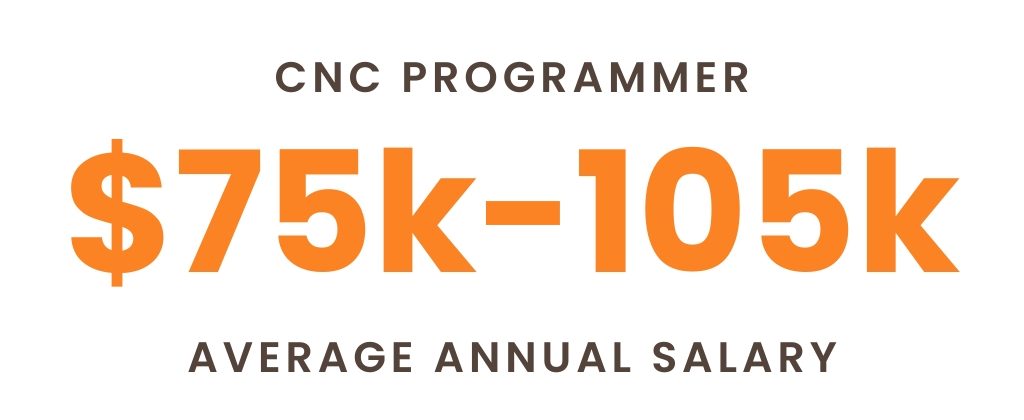
Average Salary Range: $75,000 to $105,000
Top Markets: Midwest manufacturing hubs, Texas, Southern California, New England aerospace corridors
CNC programmers consistently rank among the highest paid roles in the CNC industry. Pay climbs quickly when programming extends beyond basic G-code edits into complex toolpaths, multi-axis machining, and optimization for cycle time and tool life.
Strong compensation correlates with experience in CAM platforms such as Mastercam, NX, or HyperMill, along with the ability to troubleshoot the machine. Employers place a premium on programmers who can reduce scrap without slowing production.
A common scenario in higher-paying shops involves programmers supporting multiple machines or cells rather than being tied to a single work center.
Multi-Axis CNC Machinist
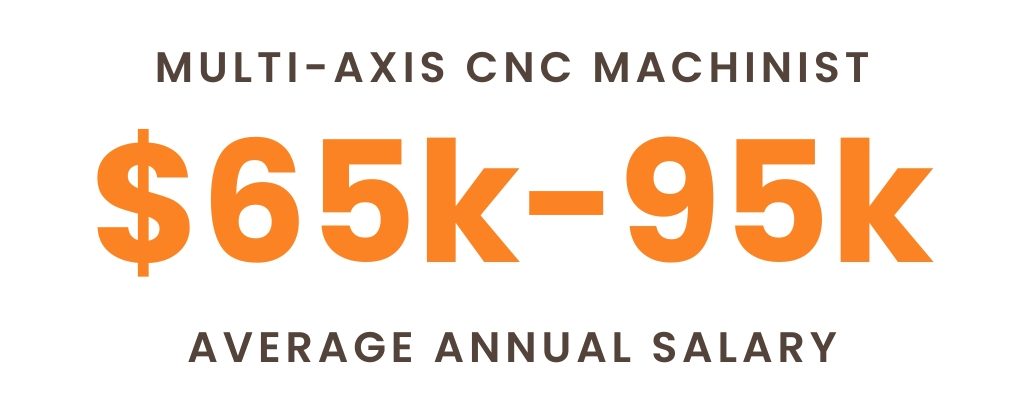
Average Salary Range: $65,000 to $95,000
Top Markets: Aerospace manufacturing regions, defense contractors, precision medical manufacturing clusters
Five-axis and mill-turn machinists sit near the top of CNC pay bands even without formal programming responsibilities. The skill lies in setup accuracy, fixture logic, and real-time decision-making under tight tolerances.
These machinists often act as the final safeguard before scrap occurs. That risk profile drives higher wages, especially in aerospace and defense environments where tolerances and documentation standards are unforgiving.
Shops hiring at the upper end of the range expect deep experience with simultaneous five-axis work and proven success running complex parts without supervision.
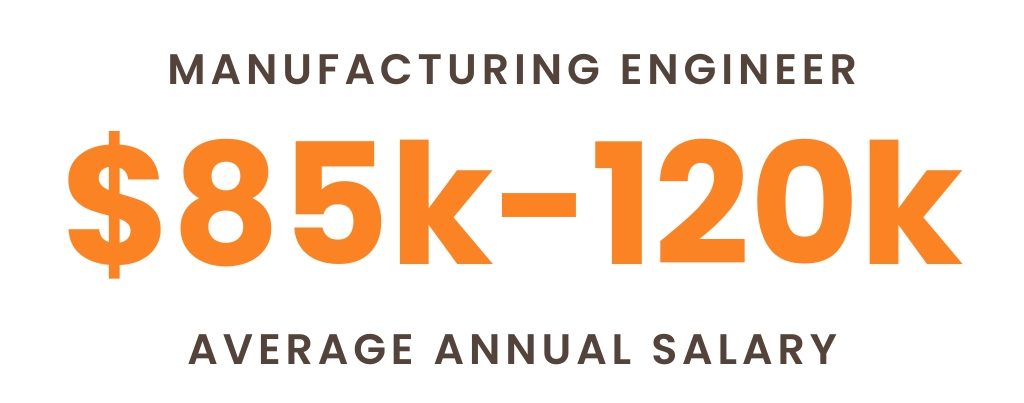
Manufacturing Engineer with CNC Focus
Average Salary Range: $85,000 to $120,000
Top Markets: Automotive suppliers, aerospace OEMs, advanced manufacturing firms
Manufacturing engineers who specialize in CNC operations bridge the gap between design intent and shop floor reality. Pay increases when engineers own process development, not just documentation.
The highest salaries appear when engineers lead new machine introductions, standardize tooling across product lines, or redesign workflows to increase spindle utilization. Familiarity with GD&T, lean manufacturing, and CAM integration directly affects compensation.
In practice, these roles often absorb responsibilities traditionally split between programming, quality, and operations.
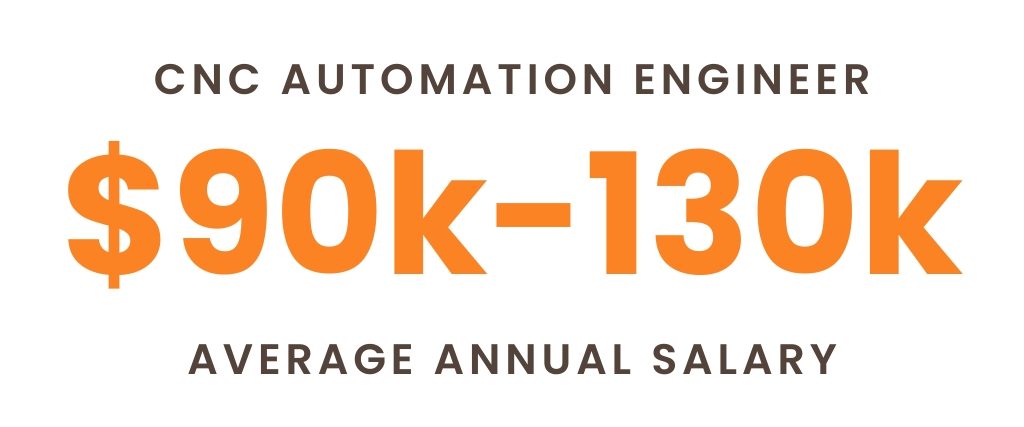
CNC Automation Engineer
Average Salary Range: $90,000 to $130,000
Top Markets: High-volume manufacturing, automotive, electronics, and lights-out facilities
Automation engineers represent one of the fastest-growing and highest-paid segments of CNC hiring. These roles focus on robotic loading, pallet systems, and unattended machining strategies.
Pay reflects the scarcity of talent that understands both CNC machining and automation systems. Experience integrating robots, conveyors, or vision systems alongside CNC machines pushes compensation upward quickly.
Facilities investing in lights-out production rarely compromise on this hire, which sustains strong salary pressure.
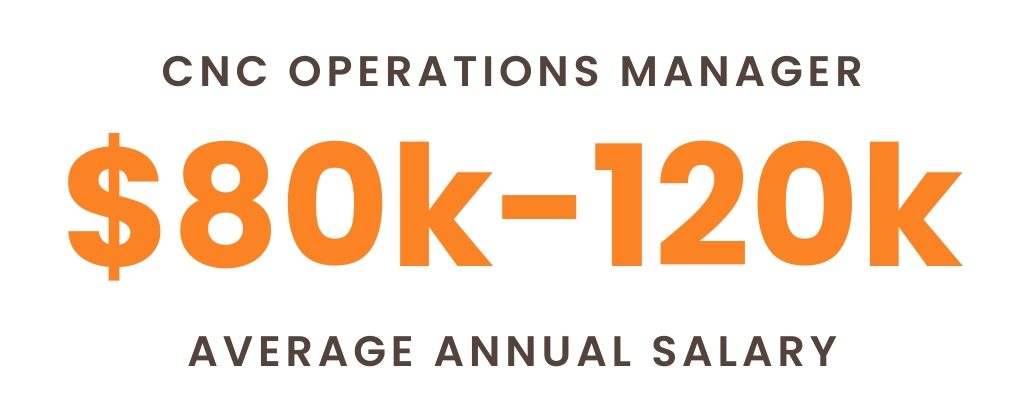
Shop Manager or CNC Operations Manager
Average Salary Range: $80,000 to $120,000
Top Markets: Contract manufacturers, multi-shift production facilities, private equity-backed shops
Management roles pay well when responsibility includes throughput, labor efficiency, and delivery performance. Titles matter less than scope.
The highest-paying managers still maintain technical credibility. Many started as machinists or programmers and retained hands-on knowledge. That background allows faster decision-making when production issues arise.
Purely administrative managers tend to cap out lower unless supported by strong operational metrics.
Industries Paying the Most for CNC Talent
Certain industries consistently pay above the CNC industry average due to complexity, regulation, or margin structure.
Aerospace and defense remain at the top, driven by precision requirements and compliance costs. Medical device manufacturing follows closely, particularly in orthopedics and implantable devices.
Energy, including oil and gas components, also supports high pay when materials and tolerances elevate production risk. Advanced automotive suppliers, especially those supporting EV platforms, have begun offering salaries comparable to aerospace in key roles.
Regional pay variation still exists, but industry alignment increasingly outweighs geography.
Where CNC Hiring Is Concentrated In 2026
CNC hiring remains strongest in regions with dense manufacturing ecosystems rather than isolated facilities.
The Midwest continues to anchor CNC employment, supported by automotive, industrial equipment, and defense suppliers. Texas maintains strong demand tied to energy, aerospace, and contract manufacturing growth. Southern California and the Northeast retain high-paying niches in aerospace, medical, and precision machining despite higher operating costs.
According to the U.S. Bureau of Labor Statistics, employment for machinists and CNC tool programmers remains fairly stable through the decade, with continued demand for advanced skills rather than entry-level operators.
Skills That Consistently Drive Higher Pay
Technical depth still matters, but breadth increasingly separates high earners from average earners.
The most reliable pay drivers include:
- Multi-axis machining proficiency
- CAM optimization and post-processor understanding
- Cross-machine platform experience
- Ability to diagnose tooling, programming, and mechanical issues quickly
Soft skills rarely appear in salary data, but communication between engineering, quality, and production consistently shows up in higher compensation offers for senior roles.
Why Salary Growth Is Outpacing Title Inflation
One trend shaping the highest paying CNC jobs in 2026 is consolidation of responsibility. Shops are reducing headcount growth while increasing individual scope.
Instead of hiring separate programmers, setup specialists, and troubleshooters, employers are paying more for fewer people who can do all three. This explains why experienced CNC professionals see faster wage growth even when job titles remain unchanged.
For business owners, this shift raises the cost of a bad hire. For candidates, it rewards continuous skill expansion more than vertical promotion.
What This Means for CNC Job Seekers and Employers
The CNC industry continues to reward people closest to production outcomes. Titles matter less than the ability to remove friction from machining processes.
Job seekers aiming for the highest paying CNC jobs benefit most from expanding into programming, automation, or cross-platform machining rather than chasing supervisory titles alone.
Employers competing for top talent face a tighter market where compensation reflects real operational leverage, not generic benchmarks.
For updated salary data, job openings, and market-specific insights across the CNC industry, Only CNC Jobs tracks hiring trends nationwide without inflating expectations. For more information about how we help candidates and companies in the CNC industry, reach out to our team.