
Many CNC shops are not struggling to find people. They are struggling to find alignment.
Roles stay open not because operators do not exist, but because postings, expectations, and screening filters fail to reflect how CNC operators actually choose where to work. In 2026, recruitment outcomes depend less on reach and more on precision.
The strategies below focus on what consistently moves the needle for CNC hiring managers who fill roles without inflating headcount costs or lowering standards.
Table of Contents
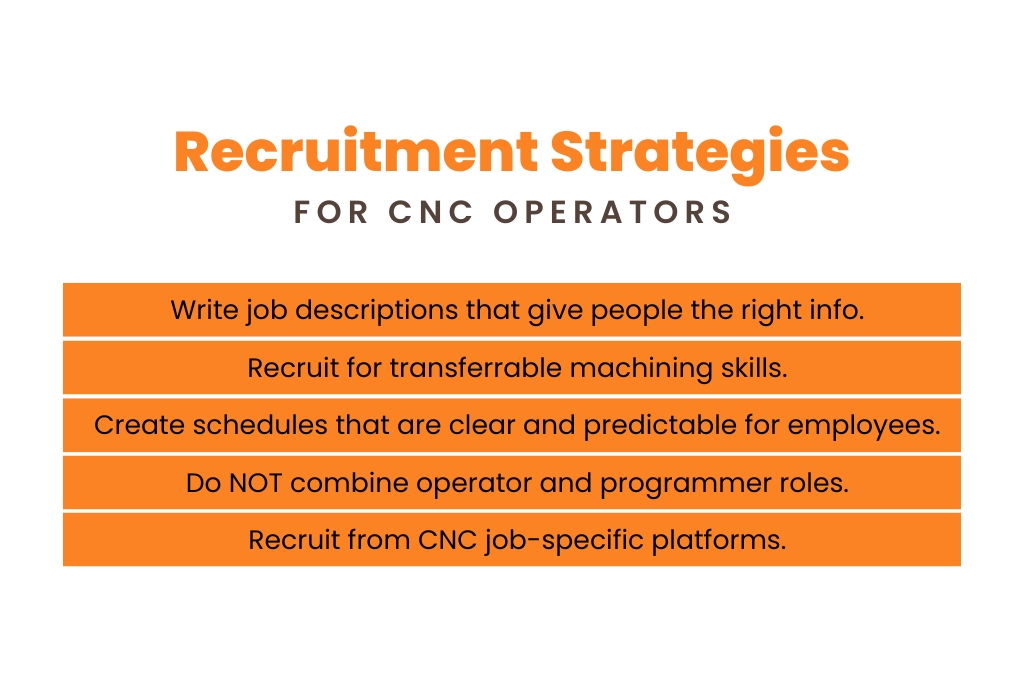
Write Job Descriptions That Read Like a Shop Walkthrough
CNC operators skim postings looking for disqualifiers, not inspiration. Vague language signals disorganization and wasted time.
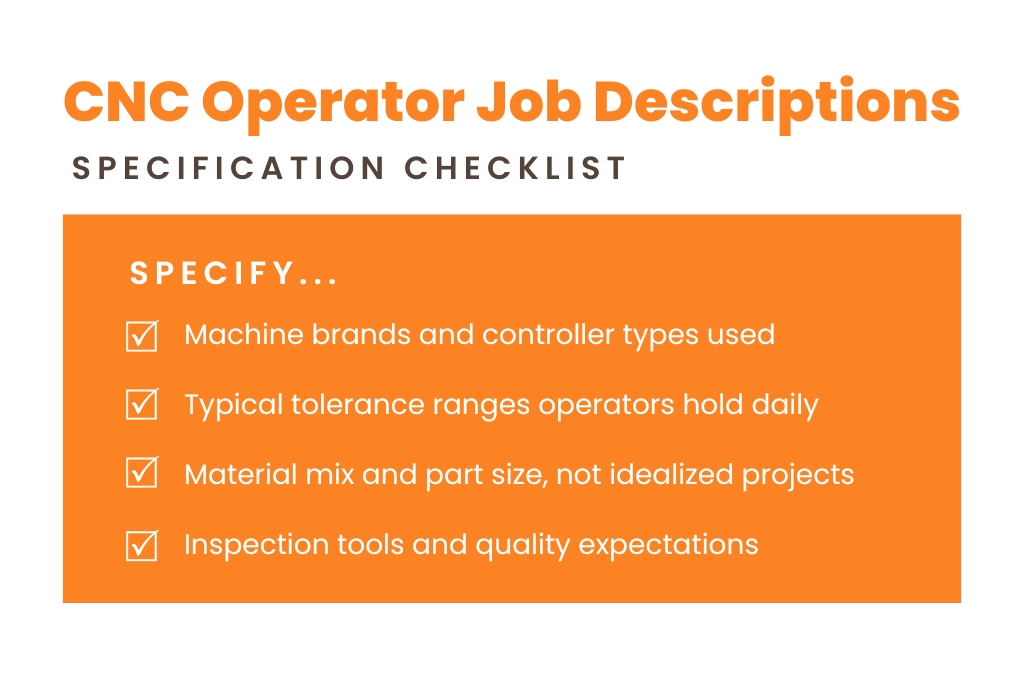
High-performing postings specify:
- Machine brands and controller types used
- Typical tolerance ranges operators hold daily
- Material mix and part size, not idealized projects
- Inspection tools and quality expectations
When postings avoid this detail, experienced operators assume the worst. Either the shop does not know its own processes or it is concealing the scope of the work.
Clear descriptions act as filters. Fewer applicants, better fits.
Recruit for Transferable Machining Skill, Not Identical Experience
Many shops still screen as if every CNC platform was unique. This slows hiring without improving outcomes.
NIMS credentials are built around standardized core competencies and duty and performance standards that apply across CNC equipment, which is why operators with solid fundamentals can often transition between machines and controllers with less friction.
Shops that broaden their recruitment strategy to adjacent experience fill roles faster and often uncover stronger long-term performers. A machinist accustomed to holding tight aluminum tolerances on one vertical mill rarely struggles to adapt to another.
What changes is not capability, but onboarding discipline.
Make Scheduling Explicit and Non-Negotiable
Schedule ambiguity quietly kills applications.
Experienced CNC operators now prioritize predictability over marginal wage increases, especially later in their careers.
Postings that define shift start and end times outperform those that promise “flexibility.” Shops that cap mandatory overtime see higher acceptance rates even when hourly pay is market average.
Recruitment improves when scheduling expectations are stated early and upheld consistently.
Stop Collapsing Operator and Programmer Roles
Many CNC postings quietly bundle operator, setup, and programming responsibilities under a single title. This narrows the candidate pool and inflates dissatisfaction after hiring.
CNC programmers generally earn higher pay and shoulder broader technical responsibility because they author, test, and refine the programs that drive CNC machinery, whereas operators focus on running the machines and maintaining quality. Median earnings reflect this split, with CNC programmers earning about $61,010 per year compared with $44,300 for operators.
Clear role separation does not prevent skill growth. It prevents misalignment. Shops that define boundaries attract candidates who understand the trade-offs and stay longer as a result.
Ambiguity saves nothing in the long run.
Recruit Where CNC Operators Actually Search
General job boards generate traffic, not relevance. Many CNC operators avoid them entirely due to noise and mis-targeted outreach.
Recruitment strategies that use CNC-specific job platforms consistently reduce screening time because candidates self-select earlier. Listings written in machining language attract operators who understand the work and expectations.
Niche platforms such as Only CNC Jobs function best as a precision layer, not a replacement for broader recruiting efforts. Their value lies in audience alignment, not volume.
What Many Shops Miss About CNC Hiring
Operators increasingly judge shops by operational maturity, not branding.
Documented setups, standardized tooling, preventive maintenance, and calibrated inspection systems influence application decisions even when never mentioned explicitly. These signals surface during interviews, shop tours, and peer conversations.
Research from the Manufacturing Institute and the American Psychological Association found that employees stay most often for job stability and security and because they enjoy the work, underscoring that retention improves when shops run predictable operations and set clear expectations.
Recruitment strategy now overlaps with how a shop runs day to day. Disorganization repels talent faster than below-market pay.
The Common Thread Across Effective CNC Operator Recruitment Strategies
Successful CNC hiring is not about novelty. It is about accuracy.
A clear scope attracts the right operators. Realistic screening shortens hiring cycles. Honest scheduling builds trust before day one.
Shops that treat recruitment as an extension of shop operations fill roles faster because candidates can see what they are stepping into. Those that do not continue to compete on job boards while wondering why nothing changes.