
Skilled CNC labor has become harder to replace, but the real pressure inside many machine shops is deeper than just hiring; it’s a steady drain of experience. A shop can refill a seat on paper and still lose months of accumulated judgment in the process. Setup logic, machine quirks, customer preferences, inspection instincts, and the little workarounds that keep production moving do not transfer neatly from one person to the next.
That leaves many CNC shops wrestling with the same question: why do some operations keep experienced machinists for years while others keep reopening the same roles?
The answer is usually less dramatic than people expect. High-retention CNC shops tend to be managed better at the daily level. They still pay competitively, of course, but the stronger differentiator is often the overall work environment.
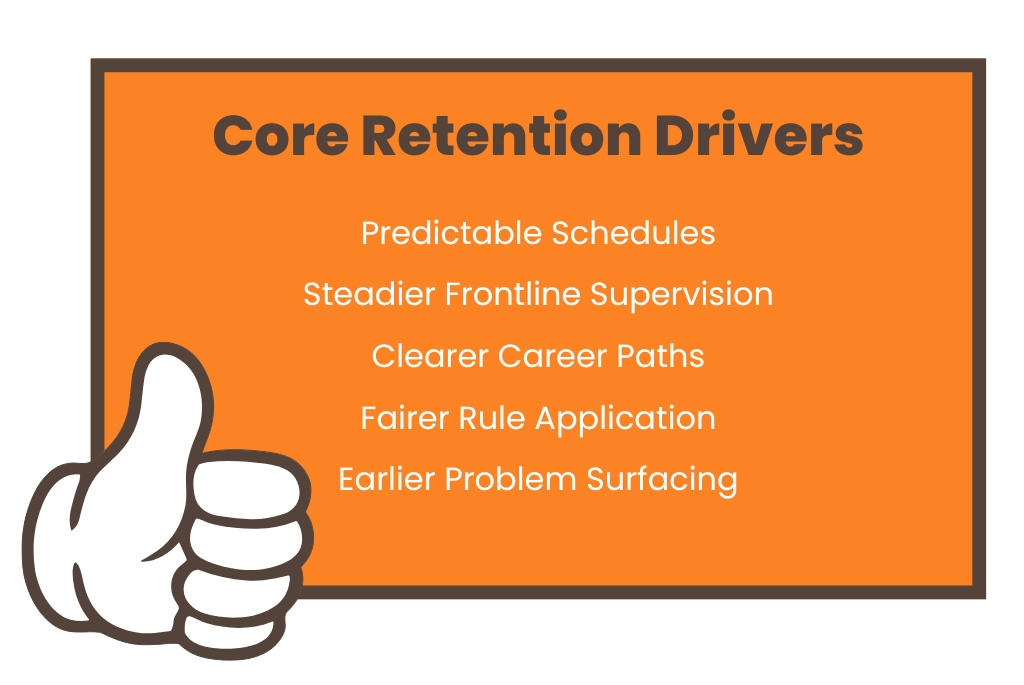
Schedules are more predictable. Frontline supervision is steadier. Career paths are clearer. Rules are applied more consistently. Problems surface before frustration hardens into a resignation.
Manufacturing research points in the same direction. In the 2024 Manufacturers Alliance workforce survey, the retention measures reported as having the greatest impact were scheduling flexibility at 82%, remote flexibility where relevant at 80%, and compensation at 78%. Employers also reported broad use of retention steps such as improving workplace culture, gathering employee feedback, and investing in training and development.
CNC retention is an operating issue. Shops with higher retention usually run with less friction, less rework, and less knowledge loss. Shops with chronic churn spend more time recreating stability they already had.
Table of Contents
The Real CNC Retention Problem Is Replacement, Not Just Hiring
BLS does not project strong growth for machinists and tool and die makers over the next decade. It projects decline. Yet employers will still have to fill tens of thousands of openings each year because workers exit the field, retire, or move into other jobs.
Losing an experienced machinist rarely means losing only output hours. It often means losing process memory. In a CNC environment, that might be the person who knows which fixture needs checking halfway through a long run, which print revision caused trouble last year, or how a certain material tends to behave when the room temperature shifts. That knowledge is rarely documented as fully as managers think it is.
High-retention shops tend to treat this reality more seriously. They don’t assume every departure is just another requisition. They understand that turnover weakens consistency and in precision manufacturing, consistency is where the margins live.
High-Retention CNC Shops Make the Work Easier to Stay In
Compensation matters. No retention argument in manufacturing should pretend otherwise. Shops that underpay relative to the market eventually get punished for it.
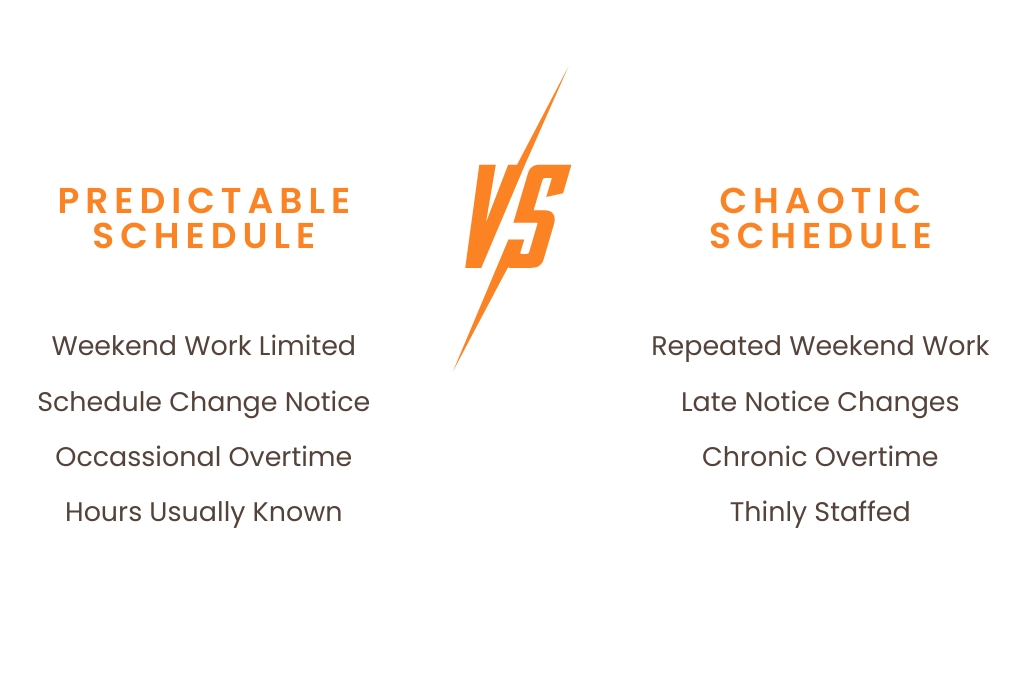
But pay alone doesn’t explain why two similar CNC shops can have very different retention outcomes. Machinists judge a job by more than just the hourly rate. They judge it by the full shape of the work. Is overtime constant or occasional? Do schedules feel predictable or chaotic? Does the same crew keep absorbing every rush order? Are setups handed off cleanly between shifts, or does every day start by sorting out someone else’s confusion?
Those details shape whether a job feels sustainable. Many CNC shops think of retention in annual terms, but employees experience it in daily increments. People stay when the work feels manageable enough to build a life around. They leave when the pay is decent but the job keeps interfering with the rest of life in ways that feel avoidable.
The best retention strategy often starts with the ordinary mechanics of the workday.
Schedule Quality Is a Bigger Retention Lever Than Most Shops Think
In a CNC shop, flexibility sounds abstract until it gets translated into something real. Very few machinists are asking for remote work. Most are asking for predictability.
The Manufacturing Institute and the American Psychological Association found that manufacturing workers stayed for a mix of reasons that went well beyond compensation. Enjoying the work was cited by 83%, job security by 79%, a family-oriented culture by 69%, and a job that fits with life demands outside work by 68%.
That final point is where a lot of CNC shops lose people without fully understanding why. Work-life fit in a machine shop often comes down to schedule control. Can employees count on their hours most weeks? Is Saturday work truly occasional, or has it quietly become standard? Do supervisors give enough notice when production needs to change? Is there enough staffing depth to absorb a callout without immediately throwing the rest of the shift into overtime?
A shop with strong wages can still create turnover if it runs on constant schedule disruption. That’s especially true for experienced machinists who have options. The decision to leave often begins quietly when the work starts feeling needlessly chaotic.
A second-shift machinist with a family may tolerate a demanding role for years if the schedule is stable and respectful. The same person may start looking elsewhere after a few months of late-notice changes, repeated weekend work, and a sense that production planning always lands on the floor to absorb. Retention weakens when employees start believing that disorder is not occasional but normal.
High-retention shops tend to manage this better. They know that overtime is sometimes necessary, but chronic overtime is usually a symptom of other shop issues. It may reflect weak planning, thin staffing, poor cross-training, or a habit of solving every problem with extra hours. Employees often see that pattern faster than management does.
Frontline Leaders Shape Whether Good People Stay
Many machine shops still promote their best technical people into lead roles and hope the rest works itself out. Sometimes it does. Often it doesn’t.
PwC and The Manufacturing Institute found that 64% of manufacturing respondents believed a positive employee experience significantly reduces attrition, yet only 17% said frontline leaders were extremely effective at shaping that experience. The same research found 77% considered clear communication extremely important, while only 29% rated frontline leaders as advanced or expert in communication.
Retention can deteriorate even in shops with modern equipment, decent wages, and steady business if the leaders create a negative work environment or can’t communicate clearly. Employees don’t experience company culture through mission statements. They experience it through their supervisor.
In a CNC environment, good frontline leaders do several things well. They set priorities clearly. They correct mistakes without turning every issue into a confrontation. They keep expectations consistent across shifts. They know when a problem is operator error and when the process itself is setting people up to fail. They also communicate changes early enough that employees don’t feel ambushed by them.
Poor frontline leadership creates the opposite environment. Instructions shift depending on who’s asking. Standards feel uneven. Feedback arrives too late or too harshly. The best performers get overloaded because they’re reliable, while weaker systems stay untouched. Over time, that kind of management tells skilled people something they can’t forget: staying in this role will be more frustrating than leaving.
If you’re going to have a serious discussion on CNC retention, supervisor quality belongs near the center of the conversation. Shops don’t just lose people to competitors. They also lose them to disorganization, inconsistency, and avoidable friction coming from the leadership layer closest to the floor.
Fairness Is Not Taken Lightly in a Precision Environment
The Manufacturing Institute and APA study found that workers who felt treated unfairly were almost 10 times more likely (19% vs 2%) to say they intended to look for a new job within the next year. Workers who felt treated fairly were much more likely to report strong engagement and a positive relationship with their supervisor.
In a CNC shop, fairness shows up in the details. Who gets the best jobs and who gets the cleanup work. Who hears about schedule changes first. Who gets training opportunities. Whether one employee can miss a target without consequences while another gets called out immediately. Whether quality issues are investigated consistently or pinned on whoever touched the part last. These things may sound small, but when they happen repeatedly, it starts to define the work environment in a negative way.
High retention CNC shops do things differently. Their employees are less likely to feel like standards shift depending on politics or convenience. Good work gets noticed. Mistakes get addressed, but it’s done in the appropriate manner. Accountability is visible, and so is support.
Respect in skilled trades isn’t won through nice slogans. It’s earned by treating people with respect and fairness when production pressure is high and something goes wrong.
Clear Career Paths Keep Younger Machinists from Leaving
Not all candidates prioritize the same things. This is especially true when looking at young machinists that are just starting their careers.
The Manufacturing Institute and APA found that training and advancement matter much more to younger manufacturing workers than to the workforce overall. Among employees under 25, 69% cited training and development and 65% cited career opportunities as reasons they stay. For CNC shops, this means younger employees are less likely to stay in a role indefinitely just because the shop is busy and the paycheck arrives on time.
They want to know where the role can lead. Can an operator learn setups? Can a setup machinist move toward programming? Can someone with strong aptitude step into quality, process engineering support, or leadership?
High-retention shops answer those questions earlier and more clearly. They don’t rely on vague promises about future opportunities; they show progression through cross-training, skill progression, pay steps, mentorship, and access to more complex work.
In many machine shops, the people most likely to leave early are also the people the shop most needs to develop. You’re not just losing an entry-level employee; you’re losing someone with the potential to become a future setup machinist, programmer, or lead before that person ever gets far enough to matter.
The Best Shops Listen Before Turnover Becomes Visible
Turnover usually looks sudden from management’s point of view and gradual from the employee’s point of view. Manufacturers Alliance found that 85% of manufacturers were gathering employee feedback as part of retention efforts, and 61% of those taking that step said it was having an impact.
The takeaway? High-retention shops create ways to hear what is going wrong while there is still time to fix it.
In a CNC environment, that may happen through regular check-ins with leads, honest shift huddles, short one-on-one conversations, or follow-ups after recurring production issues. The format matters less than the timing. If the shop only learns about schedule frustration, management inconsistency, or training gaps after someone resigns, it’s already too late.
This is where many average shops stumble. They hear complaints as noise and departures as isolated decisions. High-retention shops are better at recognizing patterns. If the same team keeps burning out, if one shift loses people faster than the others, or if employees plateau and leave after a similar tenure point, the issue usually sits in the system somewhere. Shops that keep people longer tend to investigate those patterns earlier instead of treating them as coincidences.
Why High Retention Changes More Than Staffing
The easiest way to underestimate retention is to think of it as an HR metric. In CNC shops, it reaches much further than that.
A shop that retains experienced people usually gets stronger shift handoffs, more stable quality performance, faster setups, and less reliance on emergency overtime. A shop with heavy churn spends more time compensating for lost familiarity. It trains more, re-explains more, checks more, and often second-guesses more.
High retention isn’t simply a sign that employees are happier. It’s often a sign that the operation itself is better controlled. The same management habits that make employees stay longer also tend to make production more stable: clearer expectations, better communication, stronger planning, and less disorder passed down to the floor.
That is why the best CNC retention strategies come in the form of disciplined shop management.
Conclusion
High-retention CNC shops don’t keep people through pay alone. They keep them by making the work more sustainable and worth staying for.
The daily environment is usually more predictable. Frontline leadership is stronger. Standards feel fair. Career growth is easier to see. Problems get addressed before they calcify into turnover.
Some retention pressure comes from outside the shop, but the biggest differences are usually created inside it. CNC shops that hold onto skilled people for the longest tend to run with less chaos, better supervision, and more visible opportunity. They don’t just fill jobs more effectively; they build workplaces that give skilled machinists fewer reasons to leave.
For help staffing your CNC shop, reach out the team at Only CNC Jobs to start promoting your open roles. Our specialized job board is made specifically for CNC job seekers and attracts candidates that are serious about the work they do. List your open positions today!