
It’s 9am, the sun is out and the world is waking up and getting to work. But not you. You’re trying to fall asleep while ignoring the buzz of the world outside because you just got home from a 9-hour night shift.
This probably doesn’t sound appealing to most people.
But what if someone gave you an extra $9,000 every year? What if your only choice was to work nights or not work at all? Does it sound more appealing now?
CNC shops would be wasting time and money by not having a night shift but finding employees to work these shifts can be a challenge for a reason. There’s a lot to consider when you factor in pay, competition, sustainability and long-term health effects.
So, is it worth it to work a night shift CNC job?
We’ll let you decide that for yourself based on the data and insights we provide below.
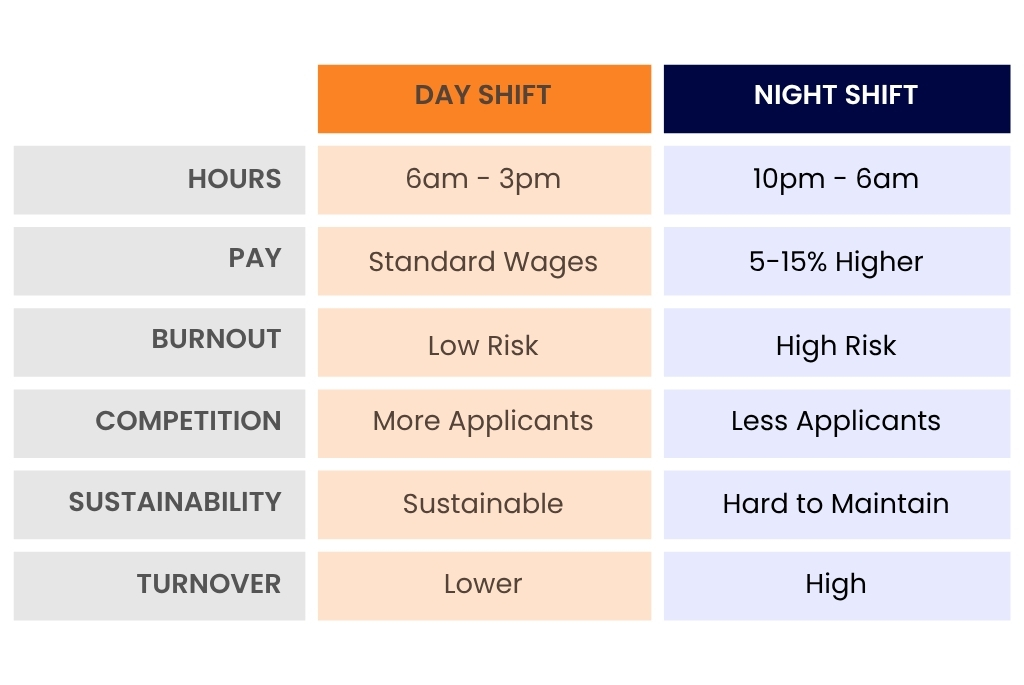
Day Shift vs Night Shift CNC Jobs
| Factor | Day Shift | Night Shift |
| Typical hours | 6am–3pm / 7am–4pm | 10pm–6am / 12am–8am |
| Pay | Standard | Often 5–15% higher |
| Burnout risk | Lower | Higher fatigue risk |
| Hiring competition | Higher | Lower |
| Long-term sustainability | Easier | Harder over time |
| Turnover risk | Lower | Higher |
Why CNC Shops Run Night Shifts
CNC shops are expensive to start and run. A machining center might cost hundreds of thousands of dollars. If it only runs eight hours a day, the shop is missing out on a significant amount of money that they could be making. Without these extra shifts, the investment becomes a lot less attractive to shop owners.
Extending production into evening and overnight shifts allows manufacturers to:
- Spread machine cost across more production hours
- Increase output without buying additional equipment
- Meet tighter delivery timelines allowing for more projects
Running multiple shifts is typically cheaper than purchasing more machines.
The difficulty comes when you need to staff those shifts. Overnight roles attract fewer applicants, which pushes employers to increase wages.
Why Night Shift CNC Jobs Usually Pay More
Night shift pay premiums exist because overnight schedules create real lifestyle costs for workers.
Employers offer extra pay to compensate for:
- Disrupted sleep patterns
- Reduced time with family or friends
- Higher turnover risk
Shift differentials in manufacturing often range from 5-15% above standard hourly wages.
For new machinists, this premium can be appealing. Night shift jobs often appear first when companies are hiring, which means they can provide faster entry into the industry if you’re starting out and/or struggling to find a job.
The Hidden Cost of Night Shift Work
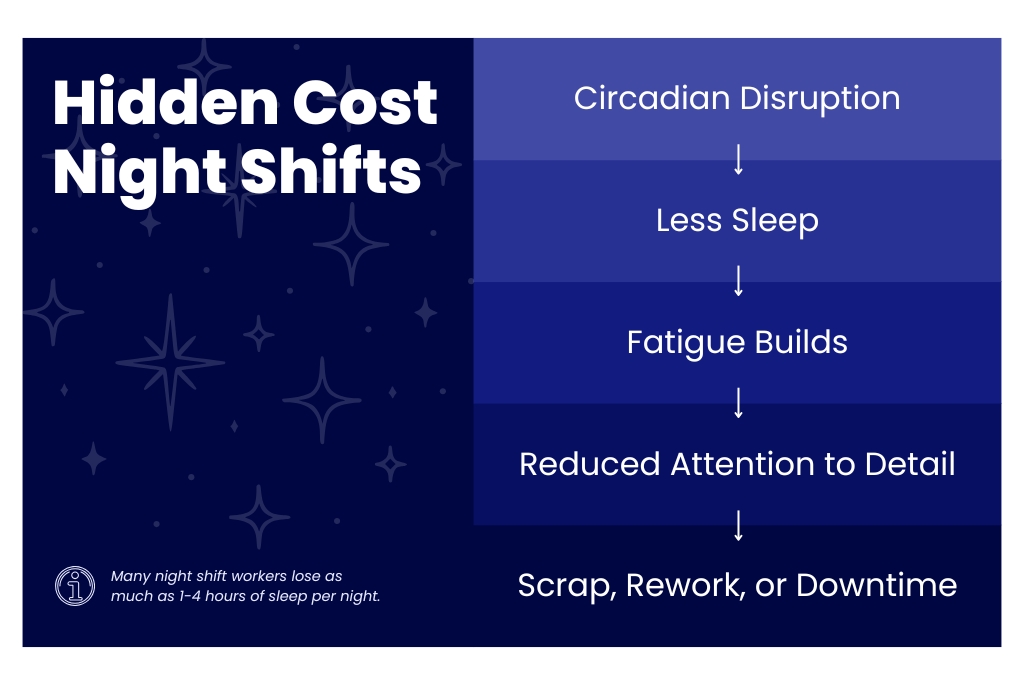
Working overnight affects sleep in ways that build up over time.
Human sleep patterns follow a circadian rhythm linked to daylight. Night work pushes against that natural cycle, making it harder for your body to recover fully. Research shows shift workers often sleep fewer hours than daytime workers.
The Sleep Foundation reports that many shift workers lose 1-4 hours of sleep per day.
This may not seem like a huge amount of time, but it accumulates quickly leading to fatigue. In CNC machining, fatigue carries additional consequences. Machining requires constant attention to detail. Operators monitor cutting tools, measure parts, and adjust machine offsets.
When fatigue increases, small mistakes become more likely. Those mistakes can lead to scrap parts, rework, or machine downtime. Over time, fatigue affects both worker wellbeing and production quality.
Long-Term Health Risks of Night Shift Work
Sleep disruption affects more than just short-term performance. Several large studies link long-term shift work to increased cardiovascular risk.
A meta-analysis published in the British Medical Journal found that shift workers have:
- 23% higher risk of heart attack
- 24% higher risk of coronary events
A later analysis reviewing data from more than 3 million workers found similar links between night shift schedules and cardiovascular health.
These studies don’t mean that overnight work guarantees health problems by any means. Many workers manage night shifts for years without issues.
But the research helps explain why night shift roles typically include higher pay. The higher pay rates compensate for a schedule that places more strain on the body over time.
Why Turnover Is Higher on Night Shift
Manufacturing already experiences steady workforce movement.
The U.S. Bureau of Labor Statistics tracks job openings and labor turnover across industries and the data shows that the manufacturing industry sees hundreds of thousands of job separations each month. Night shifts often experience even higher turnover.
Several factors drive this pattern:
- Fatigue and sleep disruption
- Family schedule conflicts
- Desire to move to day shift roles
Many shops see the same cycle repeat. Workers start on night shift to gain experience. After gaining skills, they move to day shift openings when they become available.
As a result, night shifts often become both a training ground and a high-turnover position.
Schedule Stability Matters More Than Many People Realize
Night shift receives most of the attention in discussions about burnout. But research suggests another factor matters just as much: schedule stability.
Workers with consistent schedules can develop predictable sleep routines. Those routines make fatigue easier to manage. Rotating schedules disrupt this process.
Employees who switch between day, evening, and overnight shifts often struggle with:
- Irregular sleep cycles
- Chronic fatigue
- Difficulty maintaining personal routines
In many cases, rotating shifts produce more strain than a stable overnight schedule.
For employers, this insight matters. A consistent night shift may be easier to retain than a constantly changing schedule.
What CNC Employees & Employers Should Take Away
For CNC Job Seekers
Night shifts can be a strategic early career move.
Advantages include:
- Higher starting wages
- Easier access to job openings
- Faster entry into CNC machining
But the schedule becomes harder to sustain over time. Many machinists eventually move to day shift roles once they gain experience. Treating night shifts as a temporary step often works well.
For CNC Employers
Night shift staffing challenges rarely disappear through pay increases alone.
Retention improves when employers focus on:
- Predictable schedules
- Reasonable overtime expectations
- Clear advancement opportunities
When workers believe they can eventually move to day shift roles, they are more likely to stay long enough to develop valuable skills.
When Night Shift CNC Jobs Make Sense
Night shift may work well for:
- Early-career machinists building experience
- Workers seeking higher hourly wages
- Employees who prefer quieter shop environments
Some machinists enjoy the independence of overnight work. Fewer interruptions allow them to focus on machine operation but maintaining success on night shift requires discipline around sleep and recovery.
When Day Shift Is the Better Long-Term Choice
Over time, many machinists prefer day shift schedules.
Day shift offers advantages that grow more important throughout a career and your life:
- Consistent sleep patterns
- Easier family routines
- Access to workplace support
Even if wages are slightly lower, the stability of daytime schedules often proves more sustainable over decades of work.