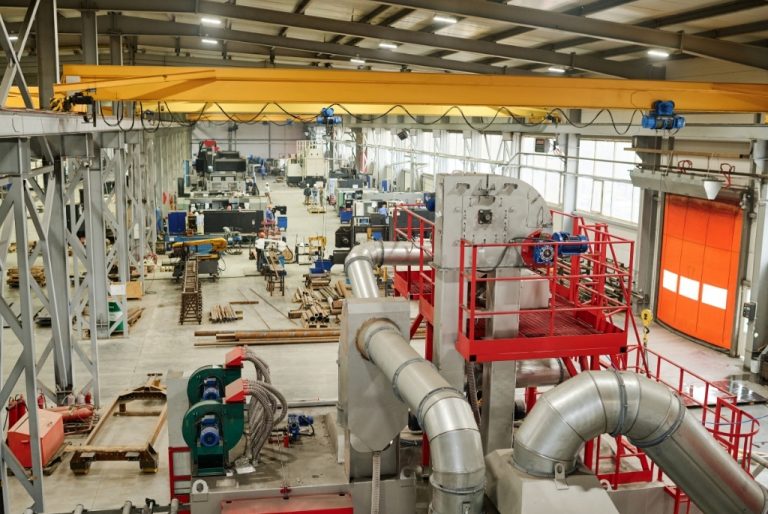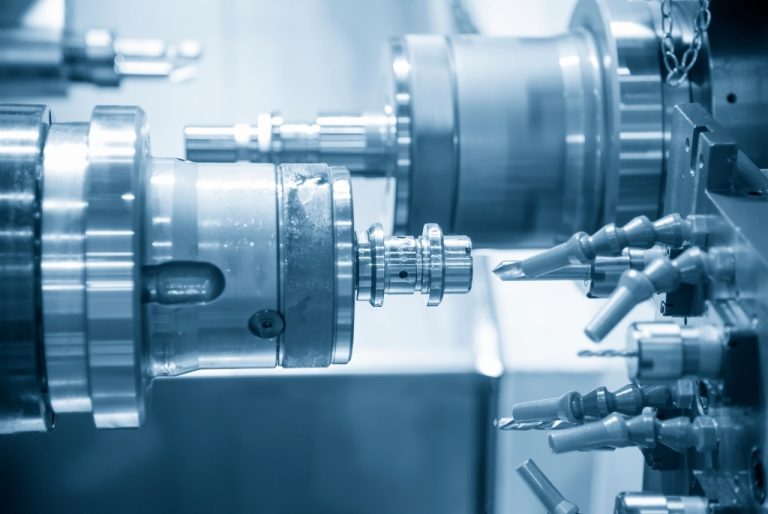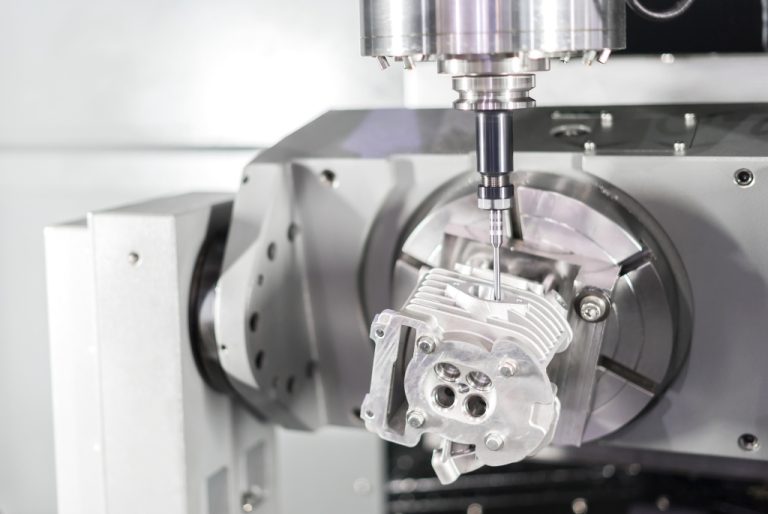
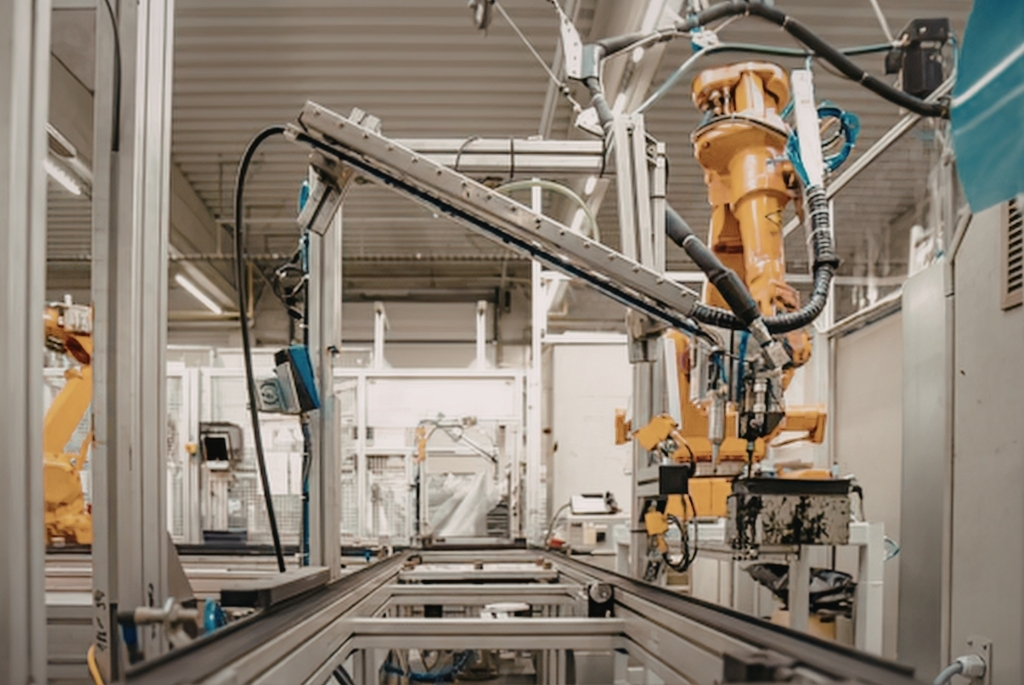
Automation can reduce some repetitive machine-tending work, but it also raises the value of uptime, fault recovery, setup stability, and technical support. The recruiting problem doesn’t disappear; it shifts toward the people who can keep automated production running when something alarms out, drifts, or stops unexpectedly.
Table of Contents
Automation Raises the Cost of Downtime
In a lightly automated shop, one weak hire may slow a machine, delay a setup, or hurt output for a shift. In a more heavily automated environment, one unresolved issue can idle a robot-tended cell, waste unattended runtime, or force an entire schedule to absorb lost capacity. The more a shop depends on automation, the more expensive downtime becomes.
A shop may still need operators and machinists, but the highest-leverage hire is often the person who can diagnose why a system stopped and restore flow quickly. BLS projections reflect that shift; industrial machinery mechanics, machinery maintenance workers, and millwrights are projected to grow 13% from 2024 to 2034, with about 54,200 openings per year. The labor market is placing real value on people who can keep equipment running.
The Recruiting Shift: Machine Operation to Machine Reliability
As CNC automation expands, the most important roles often focus more on reliability. These roles include industrial maintenance mechanics, electro-mechanical or mechatronics technicians, setup and programming machinists who can stabilize an automated process, and support talent who can work across mechanical, electrical, and software-driven systems.
These roles matter more because automated production depends on more than cycle time. It depends on repeatability, recovery, and system behavior over long runs. A shop can train someone to navigate a machine interface faster than it can develop someone who understands why a fault keeps recurring, why a process becomes unstable overnight, or why dimensional drift shows up only after extended unattended runtime.
The broader skills data points supports this. Deloitte and The Manufacturing Institute report that 40% of current skill requirements in advanced manufacturing are expected to evolve over the next five years. The same report found a 75% increase in demand for simulation and simulation software skills from 2019 to 2023. This shift means CNC shops are going to need people who can connect machining fundamentals to automation, controls, and troubleshooting in the coming years.
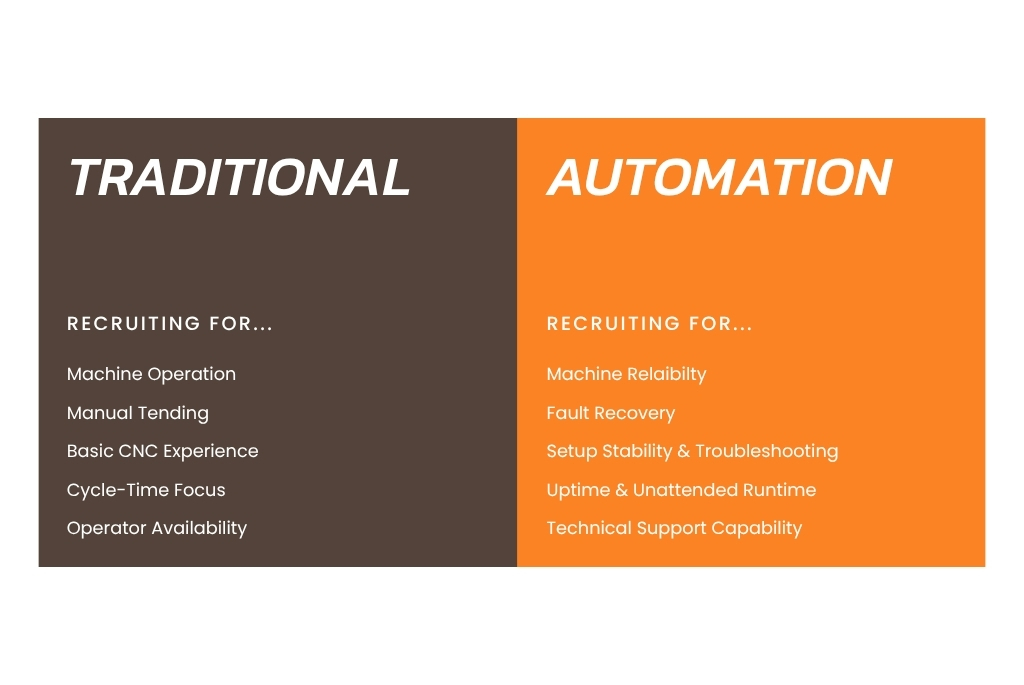
Shops Often Keep Recruiting for Yesterday’s CNC Roles
A common mistake is to automate production without changing the hiring model. The shop adds robot tending, pallet systems, or more unattended runtime, then keeps recruiting as if the main need is still a conventional operator profile.
In an automated environment, the bottleneck is process recovery, setup integrity, equipment support, and the ability to keep a more complex system stable over time. In this case, you’re not looking for general CNC experience; you’re looking for a that candidate has handled fault recovery, automated cells, setup troubleshooting, or coordination with maintenance.
Automated Shops Still Need Machining Talent, but the Skill Mix Changes
Automation doesn’t erase the need for machining knowledge; it broadens the ideal candidate profile. In a more automated shop, a strong hire may still come from a machining background, but that person is more valuable if they also bring setup competence, process ownership, comfort with sensors and controls, and the ability to work across maintenance and production.
Automation doesn’t necessarily mean you need less people. It can reduce some low-complexity labor, but it often increases demand for higher-leverage labor. The manufacturing labor market still reflects both a skills gap and an applicant gap. Shops are investing in equipment while still struggling to find enough people who can support increasingly technical production systems.
Recruiting Shift: Focus on Capability vs Experience
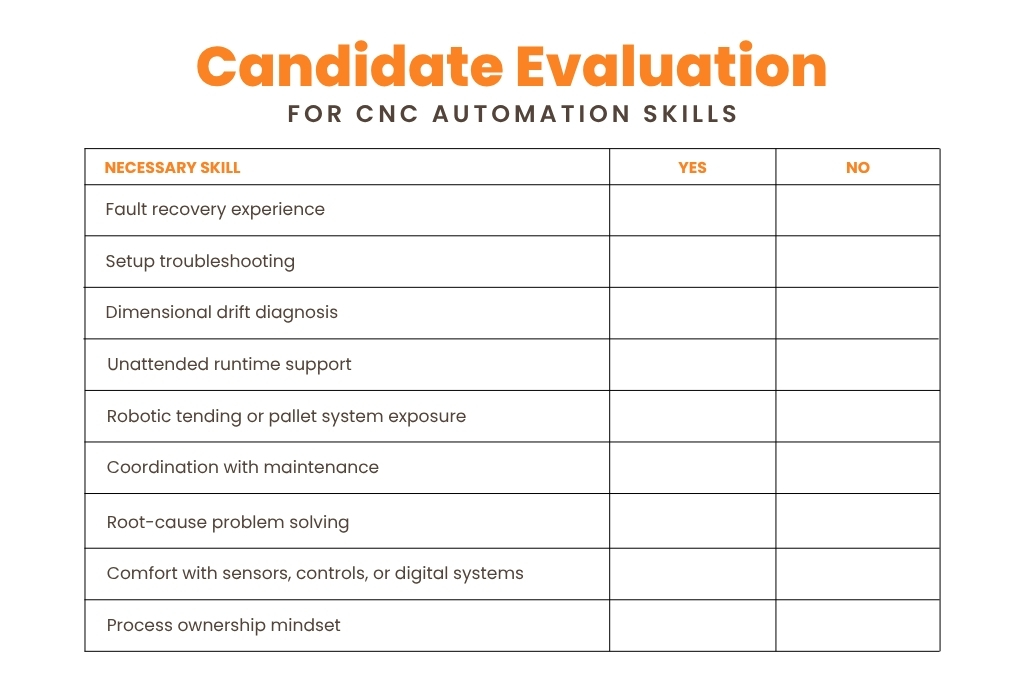
In this kind of environment, “X years of CNC experience” becomes a less effective hiring filter. Someone can have years on a machine and still have limited exposure to automation support, diagnostics, unattended runtime, or root-cause problem solving.
A better recruiting process looks for proof of capability. Has the candidate recovered processes after faults? Worked through dimensional drift? Coordinated with maintenance on recurring failures? Supported robotic tending, pallet systems, conveyors, or other automation layers? Those questions reveal more because they show how the person operates when a system becomes unstable.
If the Market Can’t Supply Talent, the Shop Has to Build It
This is where recruiting strategy and training strategy start to overlap. In many markets, the exact hybrid candidate an automated CNC shop wants is hard to find. Waiting for the open labor market to solve that problem is often unrealistic.
Manufacturers are already responding by building pipelines instead of relying only on job ads. Deloitte and The Manufacturing Institute report that 94% of surveyed manufacturers are forming at least one partnership to improve attraction and retention, and respondents partner with four or more organizations on average. Apprenticeship.gov reports 97,500 registered apprentices served in advanced manufacturing in 2025, up 20% over five years.
Companies can start investing in talent acquisition through technical college partnerships, apprenticeship models, and internal cross-training paths that move people from operation into setup, maintenance-support, or automation-support roles.
The Recruiting Pitch Changes
Automated shops also have to present the work differently. The value proposition is cleaner workflows, more technical work, stronger advancement into setup, programming, robotics, or maintenance, and clearer skill growth over time.
Candidates often compare career paths, not just hourly rates. A role that builds future-relevant skills is more attractive than one that feels like repetitive machine attendance with no progression. That has retention value too. The Manufacturing Institute reports that 47% of respondents identified flexible work arrangements such as flexible shifts, shift swapping, and split shifts as the most impactful strategy for retaining employees. It also cites research showing employees who believe they can acquire future-relevant skills are 2.7 times less likely to leave in the next 12 months.
What Shops Should Change After Automation
Once automation goes in, recruiting should change with it.
Job descriptions should define the real work: fault recovery, unattended production support, setup stability, coordination with maintenance, and recurring problem diagnosis.
Interviews should be more scenario-based and less dependent on résumé screening alone.
Compensation should reflect the value of uptime-protecting roles, even when those jobs are less visible than front-line production.
Career paths should also be easier to see, so candidates understand how operator, setup, programming, maintenance-support, and automation-support roles connect.
Conclusion
CNC automation changes recruiting strategy because it changes the risks that present themselves. The shop still needs machining talent, but the bigger risk often shifts toward machine uptime, reliability, and recovery. In an automated environment, the challenge is finding and developing enough people who can keep a more technical production system stable, recover it when it fails, and grow with the next layer of automation.
If you’re trying to hire a new employee for your automated CNC shop, consider reaching out to Only CNC Jobs to advertise your positions on our specialized job board.