If you’ve ever been curious about CNC careers, how to break in, what paths you can follow, and where this field is heading, you’re in the right place. We’ll walk you through what CNC work really is, why it matters, real numbers from 2025, and exactly how to start strong. Let’s get started!
What Are CNC Careers?
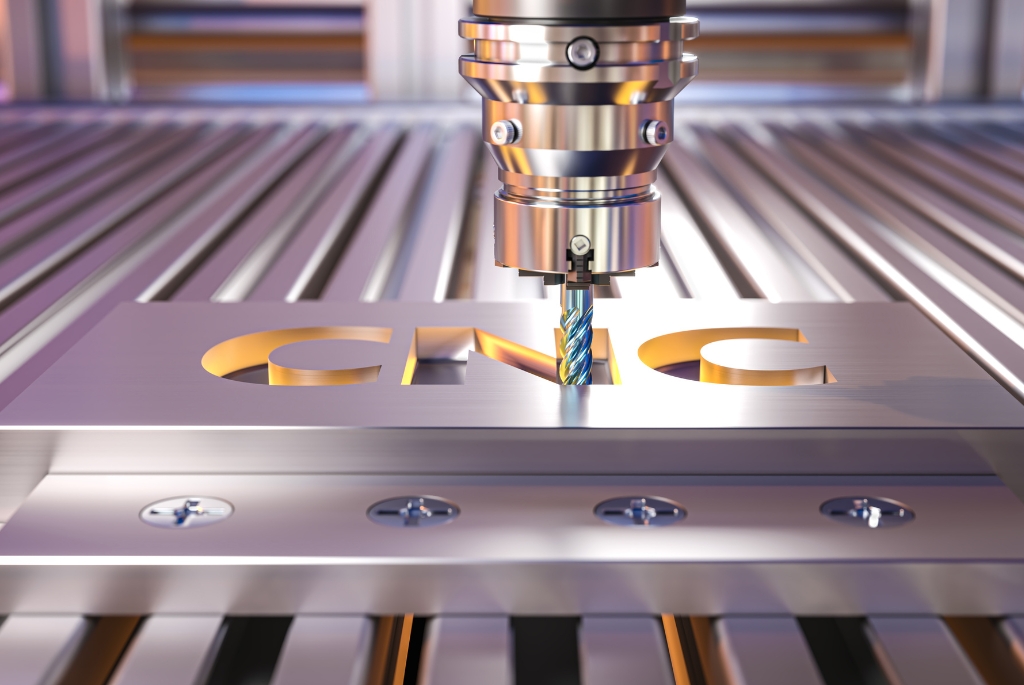
CNC stands for Computer Numerical Control, and it’s the backbone of modern manufacturing. CNC machines use computer programming to automate the cutting, drilling, milling, and shaping of parts with precision that’s impossible manually. The parts range from aerospace components to medical devices.
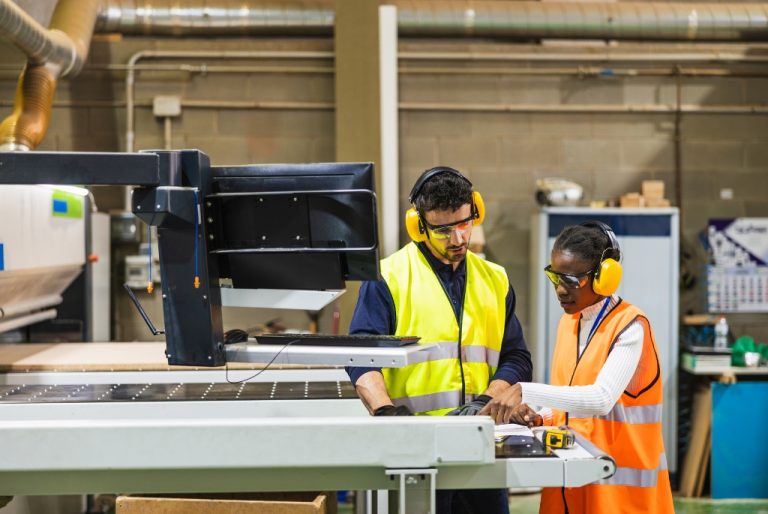
People working in CNC careers range from machine operators to high-level programmers and engineers who design and optimize machining processes. It blends hands-on technical work with digital skills, making it one of the most exciting fields in skilled trades today.
Why CNC Careers Matter (and Why Now Is a Great Time to Start)
Even though some broad occupational data show modest projections for traditional machinists, CNC skills remain highly relevant, especially as manufacturers adapt to advanced automation and smart factories.
Steady openings: The U.S. Bureau of Labor Statistics projects about 34,200 average annual openings for machinists and tool & die makers over the decade to 2034 largely due to retirements and turnover.
- Automation expands opportunities: CNC careers are evolving from basic machine operation into programming, automation integration, and robotics support. These are roles that significantly outpace the typical growth of machine operator jobs.
The combination of consistent demand plus evolving higher-value roles makes this a future-proof career choice.
CNC Careers Snapshot: Today’s Roles & Salaries in 2025
Here’s a breakdown of common CNC roles you might chase, along with real compensation data from 2025:
Entry-Level Roles
- CNC Machine Technician: ~$36,320 per year (median) with range from ~$31,600 to ~$43,400.
- CNC Operator / Tool Operator: ~ $53,000 median with potential growth as you advance skills (typical in operator roles).
Mid-Level & Skilled CNC Roles
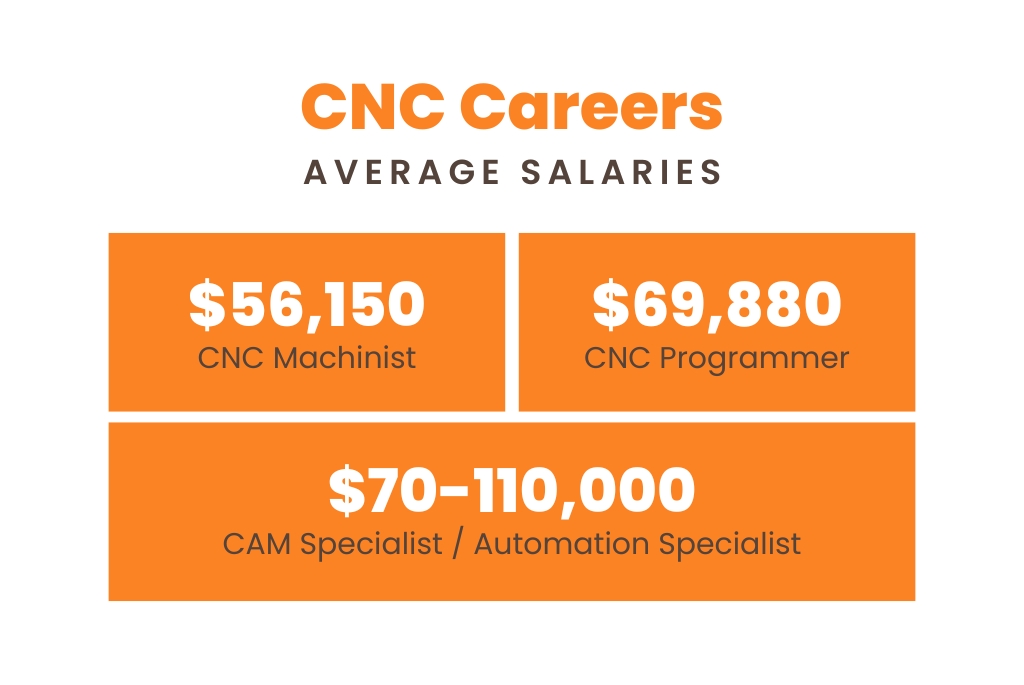
- CNC Machinist: The broader category that includes CNC work shows median wages around ~$56,150 for machinists and ~$63,180 for tool & die makers.
- CNC Programmer: ~$69,880 median for tool programmers; advanced skills can push pay well into six figures.
Specialized & Growth Paths
- CAM Technician / Automation Specialist: Often $70,000–$110,000+ as you combine CNC knowledge with software and robotics skills.
Whether you start as a technician or aim for high-end programming roles, CNC careers offer a range of progression opportunities.
The Key Paths into CNC Careers
So, you’re convinced CNC is a great direction. What’s the typical path?
Start With Technical Training
Most CNC professionals begin with some form of technical education. This could include:
- Vocational or community college programs in machining, CAD/CAM, or manufacturing technology.
- Certification courses focused on CNC operation, programming (G-code), or software like Mastercam and Fusion 360.
You don’t need a bachelor’s degree to start; many people begin with a high school diploma plus targeted training.
Explore Apprenticeships & On-The-Job Training
Manufacturers often hire apprentices or junior operators who learn hands-on while earning pay.
- Apprenticeships combine structured instruction with practical work.
- On-the-job training accelerates your learning in real CNC environments.
This “learn-as-you-go” approach is especially valuable if you prefer practical experience over classroom time.
Build Practical Skills That Employers Want
Whether you’re training or already on the shop floor, these skills make you stand out:
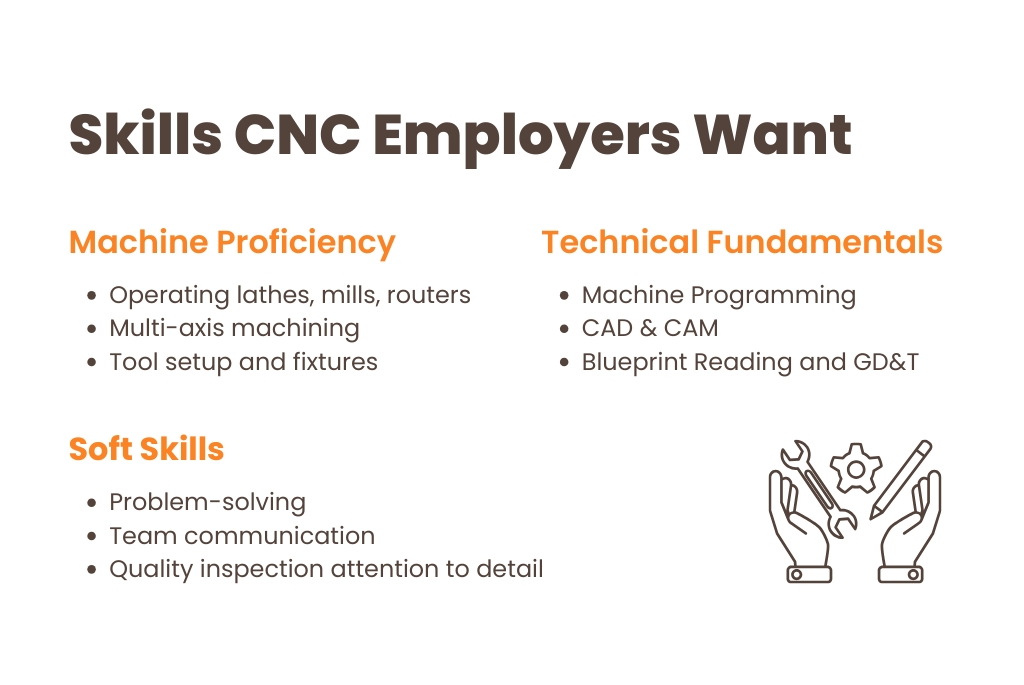
Technical fundamentals
- G-code and M-code (machine programming)
- CAD (Computer-Aided Design) and CAM (Computer-Aided Manufacturing)
- Blueprint reading and GD&T (Geometric Dimensioning & Tolerancing)
Machine proficiency
- Operating lathes, mills, routers
- Multi-axis machining
- Tool setup and fixtures
Soft skills
- Problem-solving
- Team communication
- Quality inspection attention to detail
These skills don’t just get you hired; they set you up for promotions and better pay.
How to Get Your First CNC Job
Landing your first CNC role usually involves four steps:
Step 1: Create a Strong CNC Resume
Your resume should highlight:
- Technical training, certifications, or coursework
- Hands-on experience (even from school projects)
- Software skills (e.g., Mastercam, Fusion 360)
- Safety certifications (OSHA, if applicable)
Focus on clarity, relevance, and measurable impact like cycles you’ve set up, programs you’ve written, or tools you’ve mastered.
Step 2: Network With CNC Pros & Recruiters
Join relevant communities:
- LinkedIn groups (e.g., CNC Jobs Worldwide)
- Local manufacturing associations
- CNC forums and maker groups
Networking often leads to job referrals, especially in smaller manufacturing shops.
Step 3: Search Smart
Sites like Only CNC Jobs specialize in CNC recruitment, showcasing roles specifically for CNC operators, machinists, programmers, and advanced manufacturing techs. Focusing on these niche platforms helps you match your skills with employers actively hiring people in CNC careers.
Step 4: Prepare for Interviews the CNC Way
Expect questions about:
- CNC machine types you’ve used
- G-code basics or CAM experience
- How you handle troubleshooting or quality inspections
Demonstrating real understanding sets you apart.
Where CNC Careers Are Headed in 2026 and Beyond
You might’ve seen mixed data on growth but here’s the clear picture from 2025:
- The overall labor market for machinists shows modest projected change, but replacement demand will generate thousands of openings annually.
- CNC programming and automation integration roles are rising as manufacturers embrace Industry 4.0.
- Advanced CNC roles that combine machining with software and robotics are becoming the new high-growth segments of the industry.
In other words: the industry isn’t disappearing. It’s transforming. Skilled CNC professionals who can adapt, especially with programming and automation skills, will be in high demand.
Final Words: Make Your CNC Career a Success Story
Starting a CNC career doesn’t require a four-year degree. What it does require is curiosity, commitment to learning, and hands-on skill development.
From your first job as an operator to advanced automation roles, CNC careers offer a clear ladder of growth, real compensation, and long-term relevance in manufacturing.
Ready to get started?
Build your CNC skillset through training or apprenticeships
Polish your resume and network boldly
Search targeted CNC jobs on Only CNC Jobs
Your future in CNC starts now.