If you’ve tried hiring for a CNC machinist job lately, you already know the truth: it’s getting harder.
Demand for skilled machinists is rising, experienced talent is retiring, and candidates today are pickier than ever about where they work. They’re not just hunting for a paycheck; they’re hunting for stability, career growth, modern equipment, and employers who get what machinists actually do.
But here’s the good news:
When you understand what CNC machinists are really looking for (and what makes them instantly skip a job posting), your hiring process becomes dramatically more effective
This guide breaks down exactly what machinists want in 2026 and what makes them run the other way.
Table of Contents
Clear, Honest Pay Ranges (and No Games)
If there’s one thing machinists consistently prioritize, it’s transparent pay. And with new pay-transparency laws and shifting expectations, candidates now expect to see salary ranges upfront.
Research backs that up. A 2023 study from the Society for Human Resource Management (SHRM) found that 82% of U.S. workers are more likely to consider applying to a job when the pay range is listed, and 74% say they’re less interested in applying to postings that don’t include a pay range.
For CNC machinists who often compare several opportunities at once, leaving out pay is basically the same as saying, “Don’t apply here.”
What candidates want
- A clear hourly rate or salary range in the job description
- Details on overtime and shift differentials
- Whether there are performance bonuses or production incentives
- How pay grows with experience, certifications, and machine complexity (e.g., 5-axis, programming skills)
What they avoid
- Vague phrases like “competitive pay” with no numbers
- Confusing or overly wide ranges that feel unrealistic
- Jobs where compensation is only discussed at the very end
If you’re paying competitively but hiding the numbers, you’re losing CNC machinist candidates before they ever hit “Apply.” Being upfront about pay is one of the fastest ways to boost the response rate to any CNC machinist job posting.
Stable Work and Industry Security
CNC machinists are practical, long-term thinkers. One of the first things they look for in a CNC machinist job is stability; both in the company and in the broader industry. And with today’s workforce trends, stability matters more than ever.
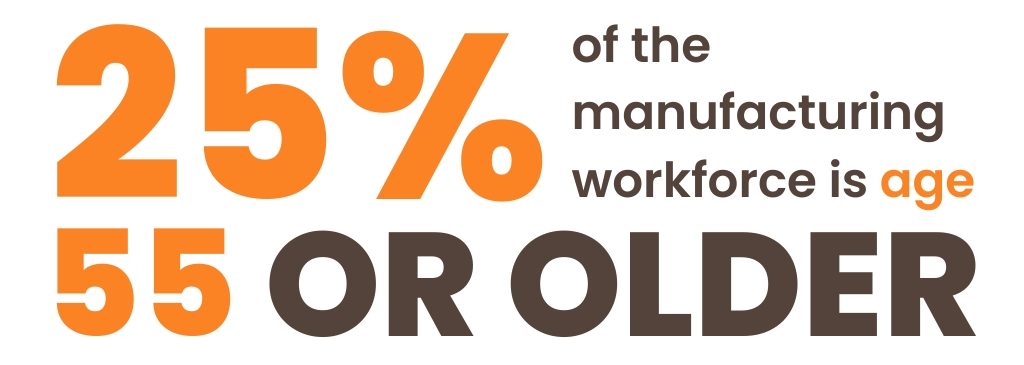
According to a recent study, nearly one-fourth of the manufacturing workforce is age 55 or older, a clear sign that retirements are accelerating just as companies struggle to replace experienced talent.
For machinists, this creates a double-edged reality:
- Skilled talent is becoming more valuable, which strengthens job security.
- Shops that fail to plan for these retirements risk instability, inconsistent workloads, or operational bottlenecks.
What candidates want
- A company with long-term contracts or steady recurring work
- Evidence of investment in replacing retiring workers
- A shop that’s growing, not shrinking
- Clear workload expectations during interviews
- A business that communicates openly about its direction
What they avoid
- Companies with frequent layoffs
- Shops heavily dependent on a single customer
- Turnover that signals deeper problems
- Vague answers about financial stability or workload
If your company is stable or growing, say it directly and prominently. For CNC machinists, certainty is a major selling point, and it’s one of the easiest ways to stand out in a competitive hiring market.
Modern, Well-Maintained Equipment
Here’s one of the biggest differentiators in any CNC machinist job:
Old equipment = fewer applicants.
Modern equipment = better applicants.
Machinists know exactly what it feels like to spend eight hours fighting a worn-out spindle, outdated controller, or inconsistent machine. And many will leave or simply never apply if a shop doesn’t invest in its equipment.
Fresh data backs this up. According to Hexagon’s America’s State of Manufacturing Report, 72% of U.S. manufacturers say outdated technology is preventing them from attracting and retaining workers.
That means outdated machines don’t just lower productivity; they actively push skilled machinists away.
What candidates want
- Newer CNC machines with reliable controls
- Automated tool changers and probing systems
- Modern CAM software (Mastercam, GibbsCAM, Fusion 360, etc.)
- Consistent preventive maintenance schedules
- Clean, organized, climate-controlled environments
- Tooling budgets that support high-quality work
What they avoid
- Machines that break constantly
- Shops with no maintenance team or schedule
- Dirty or unsafe environments
- “We make do with what we’ve got” cultures
- Old controllers that slow down cycle times and frustrate workflows
If your shop uses modern, well-maintained machines, highlight it prominently in your job post. And if your equipment is older but well cared for, emphasize your maintenance program and plans for upgrades. Machinists want to know you take your equipment, and their work, seriously.
Career Growth, Upskilling, and Certifications
One of the most overlooked motivators for machinists is skill development. Because CNC technology evolves constantly, machinists want employers who help them stay ahead.
The industry is shifting in that direction. Recent research shows that 54% of manufacturing companies plan to significantly increase their investment in employee upskilling over the next five years.
That means companies offering training and advancement opportunities have a major competitive edge.
What candidates want
- Training in 4-axis and 5-axis machining
- CAM programming training
- Opportunities to move into programmer or lead roles
- Company-funded certifications (NIMS, OSHA, etc.)
- Cross-training opportunities to expand skills
What they avoid
- Shops where machinists stay stagnant for years
- “Just push the button” roles
- No training budget
- No path to senior roles
If you offer training, mention it early and often. It’s one of the biggest differentiators in today’s machining job market.
Work-Life Balance and Realistic Scheduling
Machinists don’t necessarily demand remote work like other industries but they do care deeply about hours, overtime expectations, and how predictable the schedule is.
Here’s why this matters:
The CDC found that long or irregular work hours significantly increase stress, fatigue, and safety risks in industrial jobs.
Candidates now consider schedule quality just as seriously as pay.
What candidates want
- Predictable weekly schedules
- Optional (not mandatory) overtime
- Four-day workweeks when available
- Shift differentials for off-hours work
- Flexibility for family and personal time
What they avoid
- Surprise weekend shifts
- 12-hour mandatory days
- Rotating shifts with no consistency
- Being short-staffed and overloaded
If your operation values work-life balance, it will set you apart from most employers instantly.
Strong Safety Culture
Skilled machinists know what an unsafe work environment looks like, and they won’t stick around for it.
And they’re right to be cautious.
Manufacturing consistently ranks among the highest industries for workplace injuries, according to the U.S. Bureau of Labor Statistics.
A strong safety culture isn’t just a legal obligation; it’s a hiring advantage.
What candidates want
- Clear PPE requirements
- Routine safety inspections
- Machine guarding and lockout/tagout procedures
- Clean shop organization
- A culture where employees report hazards freely
What they avoid
- Shops that ignore OSHA standards
- Cluttered, chaotic workspaces
- Supervisors who shift blame instead of solving problems
- “We’ve always done it this way” environments
Highlight safety every chance you get. It’s a top priority for seasoned machinists.
Respectful Leadership and a Healthy Culture
People don’t leave machining, they leave bad management.
Gallup’s 2025 State of the Global Workplace report finds that 70% of a team’s engagement is attributable to the engagement of their manager. In other words, manager engagement explains roughly 70% of the variance in team engagement outcomes. This underscores that when managers are engaged, their teams are more likely to be engaged, and when managers are disengaged, team engagement drops too.
In machining environments, poor leadership creates real problems like:
- Unrealistic cycle-time expectations
- Poor communication
- Blame culture
- Lack of recognition
- No listening or feedback loops
What candidates want
- Managers who have machining experience
- Leaders who listen
- Fair workload expectations
- Appreciation for skill and craftsmanship
What they avoid
- Yelling, micromanaging, or disrespect
- Dysfunctional teams
- Unclear expectations
- Supervisors who don’t understand machining
Culture is a massive competitive advantage, especially as the talent pool shrinks.
A Fast, Straightforward Hiring Process
Here’s something many employers underestimate:
Skilled machinists often have 3-5 job offers within days.
If your hiring process drags, you’re losing talent to faster-moving competitors.
A 2023 report from the National Association of Manufacturers (NAM) showed that manufacturing job openings remain historically high compared to available talent, meaning qualified candidates aren’t waiting around.
What candidates want
- Apply in under 3 minutes
- Quick follow-up (24–48 hours)
- Straightforward interviews
- Clear job expectations and benefits
What they avoid
- Long application portals
- Weeks between interviews
- Confusing communication
- “We’ll be in touch” with no timeline
Hiring speed is now a competitive edge.
Realistic Job Previews (No Surprises)
CNC machinists hate guessing games.
When job posts leave out essential info like materials, tolerances, machines used, or daily responsibilities, candidates assume the worst.
What candidates want in a job post
- Machines they’ll run
- Software used
- Materials (aluminum, titanium, plastics, etc.)
- Tolerances required
- Shift details
- Team size
- Tooling expectations
- Physical requirements
What they avoid
- Vague descriptions
- “Other duties as assigned”
- No mention of tools or machines
- Conflicting expectations during interviews
Clear, detailed job posts consistently attract more qualified candidates.
What Makes a CNC Machinist Actually Apply?
After observing thousands of machinist job searches across Only CNC Jobs, the winning formula looks like this:
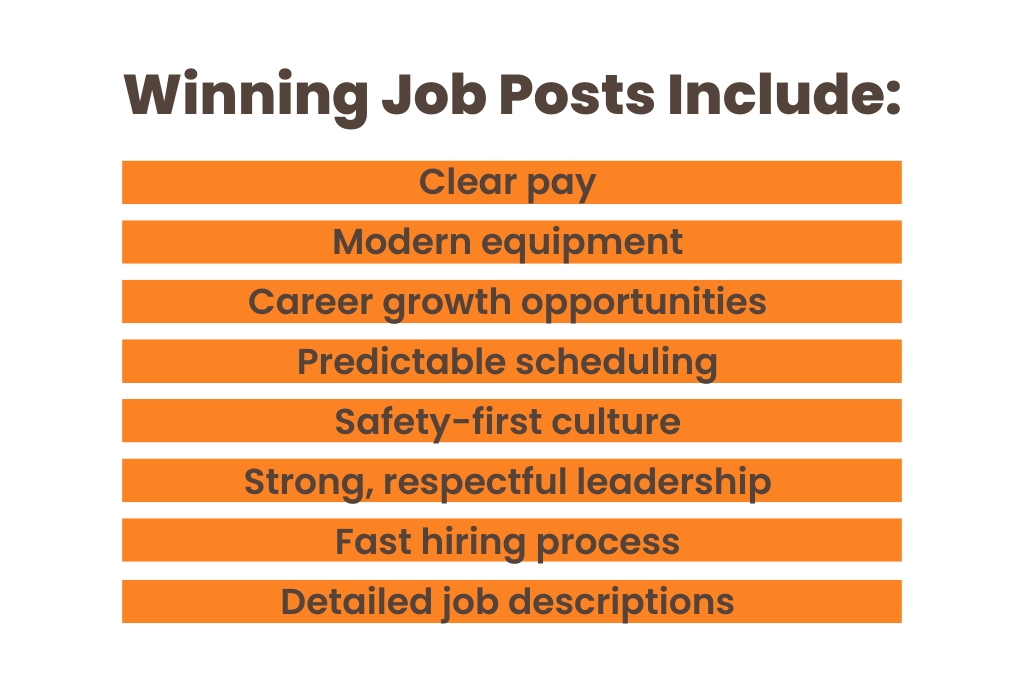
Winning CNC Job Posts Include:
- Clear pay
- Modern equipment
- Career growth opportunities
- Predictable scheduling
- Safety-first culture
- Strong, respectful leadership
- Fast hiring process
- Detailed job descriptions
Winning Employers Offer:
- Investment in people and machines
- Stability and clear long-term plans
- A culture where machinists feel respected
Put simply:
Old-school manufacturing culture pushes candidates away.
Modern, transparent, growth-oriented companies attract top machinists easily.
Ready to find the best CNC talent? Check out Only CNC Jobs!