
Hiring CNC machinists can feel like trying to hit a tight tolerance with a dull tool.
You post the job. You get a few applicants. Half don’t match the shift. A couple can’t pass a basic print read. And the one strong candidate? They’re gone in 48 hours.
That’s not your imagination. Manufacturing is staring at a long-term talent squeeze. One widely cited manufacturing talent study estimates 3.8 million manufacturing roles could open between 2024 and 2033 and about half (1.9 million) could go unfilled if the skills gap isn’t addressed.
And machinists are a perfect example of the “replacement demand” problem: even where overall employment projections soften, hiring doesn’t stop. The BLS projects about 34,200 openings per year for machinists and tool & die makers (largely to replace people who retire or leave the labor force).
So how do you actually win CNC machinist recruitment?
You don’t “post and pray.” You run a tighter playbook built around clarity, speed, pipeline, and fit.
Let’s get into the top 5 CNC machinist recruitment strategies that consistently work (and how Only CNC Jobs helps you put them on autopilot).
Table of Contents
Quick Answer: What Are The Best CNC Machinist Recruitment Strategies?
The 5 Best Strategies for CNC Machinist Recruitment
- Write a job post that filters in qualified machinists (clear must-haves, pay range, shift, real work examples)
- Build a local pipeline with schools & registered apprenticeships
- Speed up your CNC machinist hiring process to reduce drop-off
- Recruit where machinists look (niche boards & referrals & targeted outreach)
- Win offers with the total package (growth path, training, schedule stability, onboarding)
Now let’s break each one down with specific steps you can use this week.
Why CNC Machinist Hiring Is So Hard Right Now
High Replacement Demand (Even When Overall Employment Is Flat)
If you’ve seen headlines about automation, you might assume machinist hiring should be getting easier. But replacement demand is the hidden engine here.
According to the BLS Occupational Outlook, machinists and tool & die makers are projected to have ~34,200 openings each year, on average, mainly because workers retire or exit the labor force.
Translation: you’re not just competing with other shops. You’re competing with time.
Manufacturing Pay Is Competitive, But Candidates Still Compare Offers Fast
Manufacturing compensation can be strong, especially when you count benefits. For example, NAM has cited average annual earnings (pay & benefits) north of $102,000 for manufacturing employees.
But machinists don’t compare your offer to “manufacturing.” They compare it to the shop down the road that:
- Offers a steadier schedule
- Has cleaner workflow
- Runs newer machines
- Gives a clear path from setup to lead
That’s why your recruitment strategy has to sell the work, not just the wage.
Strategy 1: Write A CNC Job Post That Filters the Right Machinists
Most CNC job ads read like a generic template. Candidates can’t tell:
- What they’ll actually do
- What “good” looks like
- Whether your shop is worth switching for
So they scroll. Here’s how to fix that.
Use A “Must-Have Skills” Section (Not A Laundry List)
If you want better applicants, stop asking for everything. Instead, split your qualifications into two buckets:
Must-have (screening):
- Blueprint reading & GD&T basics
- Setup on (specific machines/controllers)
- Inspection tools (mics, calipers, height gauge, etc.)
Nice-to-have (selling):
- CAM experience (Fusion/MASTERcam/etc.)
- First-article & in-process inspection ownership
- Mentoring juniors
This makes your CNC machinist recruitment message sharper and helps candidates self-select.
Add a Pay Range and Shift Details Up Front
Great candidates don’t “apply to learn the pay.” They apply to jobs that respect their time.
Put these details in the first 10 lines:
- Pay range
- Shift (and whether it’s fixed or rotating)
- Overtime expectations
- Differential (if any)
This also reduces churn later in the hiring process (when candidates drop because the schedule doesn’t fit).
Include 3 Real Shop-Floor Examples of the Work
This is the easiest way to attract the right machinists fast. Add a section like:
What you’ll run (real examples):
- Haas VF-4, Fanuc control, aluminum aerospace brackets
- Okuma lathe, stainless shafts, tight concentricity callouts
- Small batch & high-mix prototypes (2–10 qty)
Now candidates can instantly “see” themselves in the role.
Strategy 2: Build a Local Talent Pipeline with Apprenticeships and Schools
If your entire plan is “poach experienced machinists,” you’re stuck in a bidding war. A smarter long-term play is building your own pipeline.
Partner with Trade Schools, Community Colleges, and CTE Programs
This isn’t complicated. It’s just consistent. Start with offering plant tours each semester, showing students modern CNC work (not 1995 stereotypes), and recruiting instructors as referral partners.
Even better: hire for attitude & basics and train the rest.
Use Registered Apprenticeships to Create Your Own Bench
Apprenticeships are having a moment for a reason: they align training with real jobs.
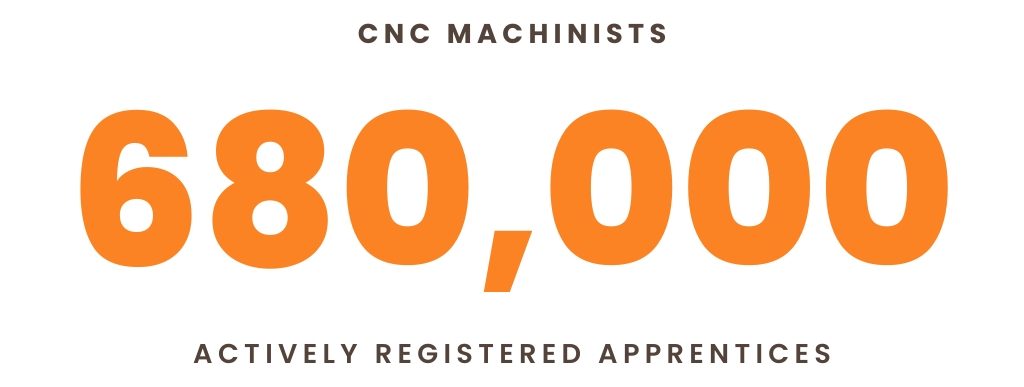
In 2024, the U.S. had about 680,000 active Registered Apprentices; more than double the count from 2014, according to reporting based on federal apprenticeship data.
For CNC machinist hiring, a Registered Apprenticeship can help you standardize:
- competencies (setup, offsets, inspection)
- wage progression
- retention (people stay where they grow)
And if you want to explore programs, the U.S. Department of Labor’s apprenticeship resources are a good starting point.
Offer “Tryout Days” and Plant Tours to Increase Conversions
One shop in the Midwest struggled to hire a second-shift CNC setup machinist for months. They weren’t underpaying. They just weren’t showing the reality of the job.
They started running a monthly “shop walk & paid tryout” event that included:
- A 45-minute tour
- A 2-hour paid bench test / measurement & print-read
- Same-day decision
They filled the role and built a shortlist for future openings. That’s a repeatable system: reduce uncertainty, increase commitment.
Strategy 3: Speed Up Your CNC Hiring Process (Without Lowering the Bar)
Speed is a competitive advantage in CNC machinist recruitment.
Because when a good machinist applies, you’re rarely the only call they’re making.
Use A 2-Step Screen: Phone & Skills Check
Instead of 3 interviews with 5 people, try this:
- 15-minute phone screen (shift, pay band, commute, core experience)
- 45–60 minute skills check (print-read & measurement & scenario questions)
That’s enough to separate “can do the job” from “sounds good on paper.”
Make Interview Scheduling Self-Serve
Don’t email back and forth for three days.
Use self-scheduling links and pre-set interview blocks. Machinists are busy. Make it easy.
Aim For A 7-Day Offer Window
If your hiring process takes 3 weeks, you’ll lose candidates you would’ve loved.
A simple goal:
- Screen within 24 hours of application
- Interview within 72 hours
- Decision & offer within 7 days
Strategy 4: Recruit Where CNC Machinists Actually Look
If you only post on general job boards, you get general applicants. To win at CNC machinist hiring, go where machinists already are.
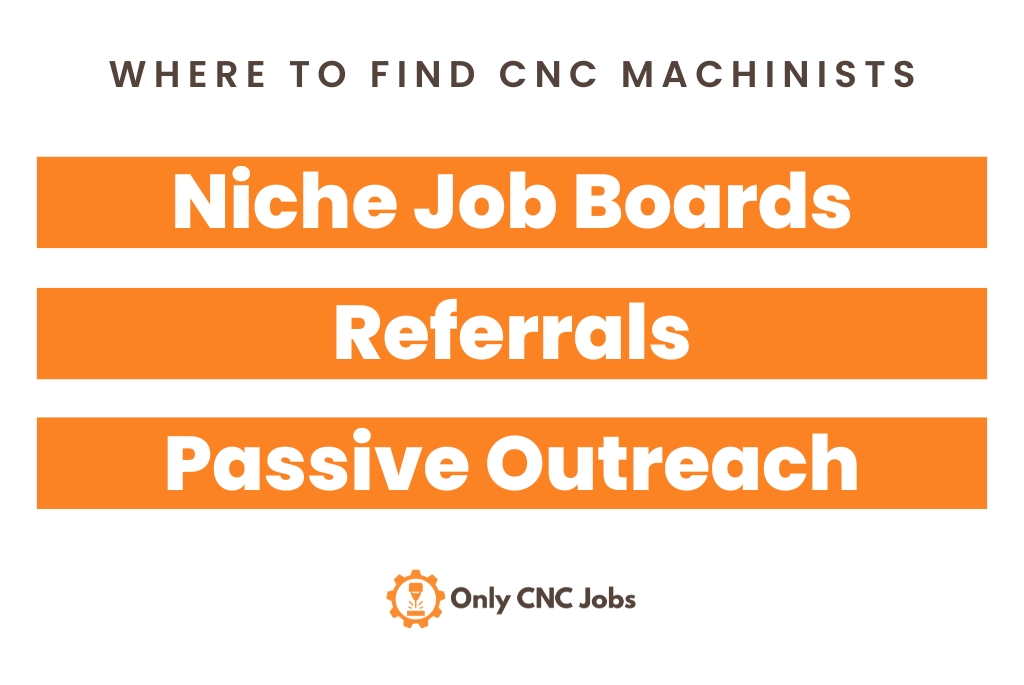
Use Niche Job Boards Built for CNC Roles
This is where Only CNC Jobs earns its keep.
When you post on a niche platform built for CNC, you’re not shouting into the void. You’re showing up where the intent is high and the audience is relevant. These are people who actually want CNC work.
That means less resume noise, higher match rates, and faster shortlists.
Activate Referrals (With A Simple Bonus Plan)
Referrals work especially well in the trades.
Keep it simple:
- $250 when the hire starts
- $750 after 90 days
And promote it weekly (not once).
Target The “Already Employed” Majority with Passive Outreach
Many of the best machinists aren’t applying to anything. They’re open… if the offer is clearly better.
Your outreach message should be short and specific:
- Machine type & controller
- Shift & schedule stability
- Pay range
- Why this role is better than their current situation
Strategy 5: Win Offers with a Total Package (Not Just Base Pay)
You can lose a great machinist even when you match pay.
Because they’re also buying:
- Quality of life
- Predictability
- Respect
- Growth
NAM’s manufacturing earnings figure (pay & benefits) underscores how much the total package matters.
Highlight Benefits, Training, And Predictable Overtime
Be specific:
- “Optional OT, not mandatory weekends”
- “Paid training time (setup, inspection, CAM)”
- “Tool allowance / boot stipend”
- “Consistent schedule (no rotating shifts)”
Sell Career Progression: Setup → Programmer → Lead
Machinists want a path.
Spell out:
- What skills unlock the next level
- How long it usually takes
- What support you provide (training, mentorship, time on CAM)
Reduce First-90-Day Turnover with a Shop-Ready Onboarding Plan
Retention is recruitment. If you lose new hires in the first month, your pipeline will never catch up. Your “first 2 weeks” should include:
- Clear expectations for scrap/rework decisions
- Who approves offsets/tooling changes
- Inspection process and documentation standards
- How jobs get prioritized
That’s how you keep the machinist you worked so hard to hire.
CNC Machinist Recruitment Checklist
A 10-Minute Checklist You Can Use Before Posting
- Job title matches how machinists search (CNC Setup Machinist, CNC Lathe Operator, etc.)
- Pay range & shift & overtime expectations are visible
- Must-have skills are short and clear
- Job includes 3 real examples of parts/materials/machines
- Application is mobile-friendly and takes < 5 minutes
- Interview plan is 2 steps max
- Decision timeline is under 7 days
- You post where CNC talent actually looks (like Only CNC Jobs)
- Referral bonus is active and promoted weekly
- Onboarding plan exists for day 1–14
FAQ
What Should A CNC Machinist Job Description Include?
At minimum:
- Machine types & controller
- Materials and tolerances
- Whether setup is required
- Inspection expectations
- Pay range & shift & overtime
How Much Should You Pay A CNC Machinist?
Pay varies by region, shift, and specialization (setup/programming, multi-axis, tight-tolerance industries). But the bigger point is this: machinists compare the total package, not just an hourly rate, especially when benefits materially change take-home value.
How Do You Evaluate CNC Skills During Hiring?
Use a short, job-relevant check:
- Print read & GD&T basics
- Measurement/inspection scenario
- Setup logic questions (offsets, tooling, first article decisions)
You’ll learn more in 45 minutes than in three “tell me about yourself” interviews.
Final Thoughts: Turn CNC Hiring into a Competitive Advantage
CNC machinist recruitment doesn’t have to feel unpredictable or reactive. When shops focus on clear job posts, faster hiring cycles, stronger local pipelines, and recruiting in places where machinists actually spend time, results follow.
Add a compelling total package and a structured onboarding plan, and hiring becomes repeatable, not rushed.
That’s where Only CNC Jobs fits in. As a platform built specifically for CNC professionals and manufacturing employers, Only CNC Jobs helps you reach qualified machinists faster, reduce noise, and fill roles with confidence. If you’re ready to stop guessing and start hiring with precision, connect with Only CNC Jobs today and make your next CNC job posting work harder for your shop.