

CNC engineering sits at the intersection of manufacturing, software, and precision problem-solving. It attracts people who like building real things but also want technical depth and long-term career leverage. Demand remains steady across aerospace, medical devices, automotive, and advanced manufacturing, especially as older machinists retire and automation expands.
This guide breaks down what a CNC Engineer actually does, how people enter the field, what the work pays in the United States, and where the best CNC Engineer jobs tend to cluster. It also covers how careers typically progress once someone moves beyond the shop floor.
Table of Contents
What A CNC Engineer Does Day to Day
A CNC Engineer focuses on how parts are made, not just whether they can be made. The role blends programming, process design, and continuous improvement.
Responsibilities vary by employer, but the core work is consistent.
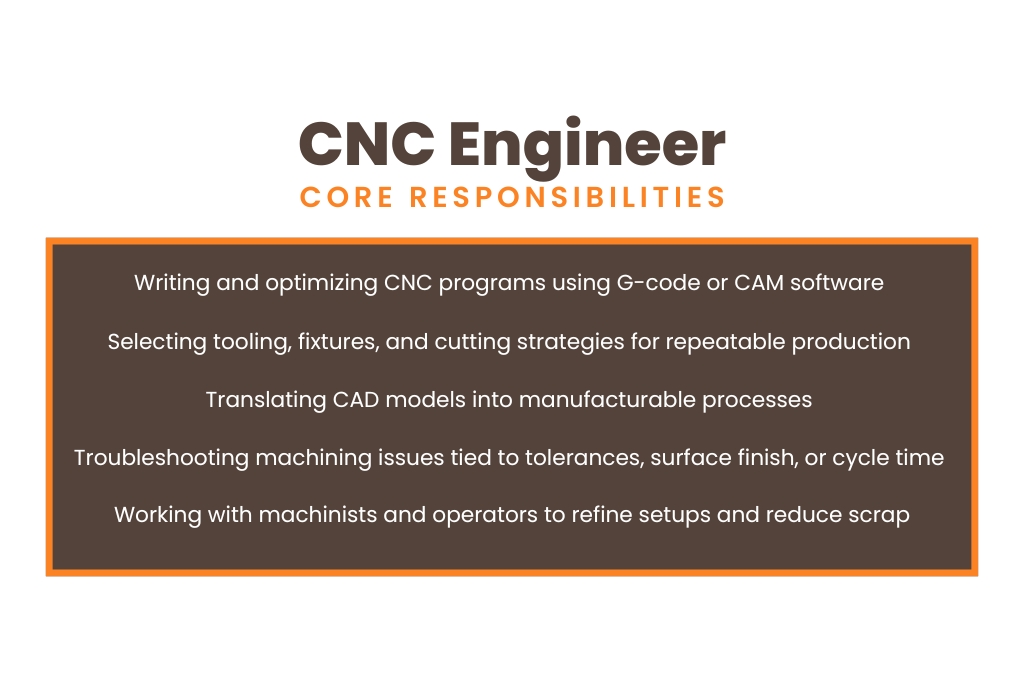
Core Responsibilities of a CNC Engineer
Most CNC Engineers are responsible for:
- Writing and optimizing CNC programs using G-code or CAM software
- Selecting tooling, fixtures, and cutting strategies for repeatable production
- Translating CAD models into manufacturable processes
- Troubleshooting machining issues tied to tolerances, surface finish, or cycle time
- Working with machinists and operators to refine setups and reduce scrap
In practice, this often means reviewing a part that machines cleanly on paper but fails under production conditions. A small change to toolpath order or feeds can turn a marginal process into a reliable one.
How CNC Engineers Differ from CNC Machinists
CNC Machinists run machines. CNC Engineers design the process behind those machines.
Many CNC Engineers start as machinists, but the engineering role shifts focus upstream. Less time at the control panel. More time analyzing programs, tooling strategies, and production data.
That distinction matters for pay, career mobility, and exposure to automation projects.
Education and Qualifications Employers Expect
There is no single path into a CNC Engineer career, but employers do look for a specific mix of education and hands-on experience.
Common Education Paths
Most CNC Engineers in the U.S. fall into one of these categories:
- Associate degree in CNC machining, manufacturing technology, or industrial technology
- Bachelor’s degree in manufacturing engineering, mechanical engineering, or industrial engineering
- Trade school training combined with significant shop experience
A four-year engineering degree opens more doors, especially in aerospace and medical manufacturing. However, strong machinists with programming depth often move into CNC Engineer roles without one.
Certifications That Actually Matter
Certifications rarely replace experience, but some carry weight:
- NIMS CNC Programming credentials
- Siemens or Fanuc CNC control certifications
- CAD/CAM certifications tied to Mastercam, Fusion, or NX
These are most useful when paired with documented production results, not as standalone credentials.
Skills That Separate Strong CNC Engineers From Average Ones
Technical skill alone does not define success in this role. The best CNC Engineers combine precision thinking with practical judgment.
Technical Skills Employers Screen For
Most job descriptions emphasize:
- Advanced CNC programming and CAM optimization
- GD&T interpretation and tolerance stack-up awareness
- Tooling selection and materials knowledge
- Multi-axis machining experience
- Process documentation and revision control
Multi-axis experience is increasingly valuable as 5-axis machining expands beyond aerospace into general manufacturing.
Non-Technical Skills That Drive Advancement
A consistent pattern emerges across high-performing CNC Engineers:
- Clear communication with machinists and operators
- Ability to diagnose problems under production pressure
- Willingness to adjust theory based on real-world results
Engineers who stay disconnected from the shop floor tend to stall. Those who collaborate closely move faster.
CNC Engineer Salary and Pay Outlook in the United States
Pay varies by region, industry, and technical depth, but CNC engineering generally outpaces pure machining roles.
Average CNC Engineer Salary
The U.S. Bureau of Labor Statistics groups many CNC Engineers under industrial and manufacturing engineering roles. As of 2026, median pay for industrial engineers is approximately $101,140 per year.
Entry-level CNC Engineers often start lower, especially without a four-year degree. Experienced engineers with multi-axis and automation exposure regularly exceed six figures in high-cost regions.
Factors That Increase Pay Faster
Several variables drive compensation upward:
- Aerospace or medical device manufacturing
- 5-axis and complex surface machining
- Experience integrating CNC with robotics or automation
- Process ownership tied to high-volume production
Companies pay more for engineers who reduce cycle time and scrap, not just write clean code.
Where CNC Engineer Jobs Are Concentrated
CNC Engineer jobs cluster where advanced manufacturing clusters exist.
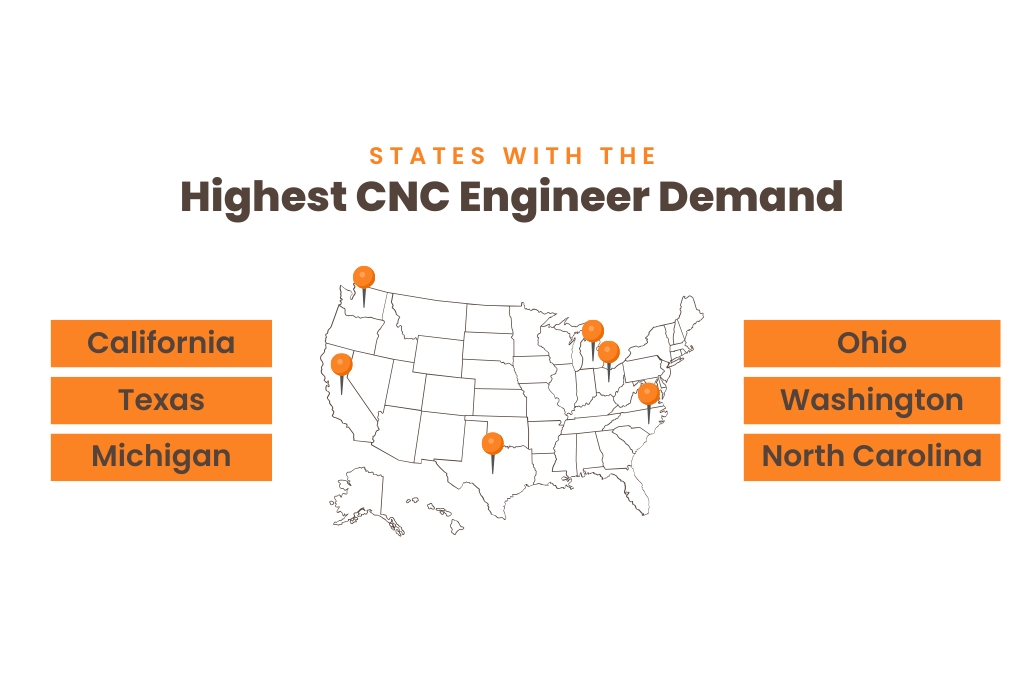
States With Strong CNC Engineer Demand
The highest concentration of roles appears in:
- California
- Texas
- Michigan
- Ohio
- Washington
- North Carolina
These states support aerospace, automotive, defense, and medical manufacturing ecosystems that rely on CNC expertise.
Industries Hiring CNC Engineers Most Aggressively
Demand remains strongest in:
- Aerospace and defense manufacturing
- Medical device production
- Automotive and EV supply chains
- Precision metal and plastics manufacturing
Medical manufacturing tends to offer stability. Aerospace often pays more but fluctuates with contracts.
How CNC Engineer Careers Typically Progress
Career paths in CNC engineering are less linear than traditional engineering tracks, but several patterns repeat.
Common Advancement Paths
After several years, CNC Engineers often move into:
- Senior CNC Engineer roles with process ownership
- Manufacturing engineering leadership positions
- Automation or robotics engineering
- Operations or production management
Some transition into applications engineering roles with machine tool or CAM software vendors.
Lateral Moves That Expand Earning Potential
Switching industries can matter more than job title. A CNC Engineer moving from job shop work into regulated manufacturing often gains pay stability and technical depth.
How Automation Is Reshaping CNC Engineering Roles
Automation is changing CNC engineering but not eliminating it.
As more shops adopt pallet systems, lights-out machining, and robotic tending, CNC Engineers spend less time writing basic programs and more time designing resilient processes.
Engineers who understand both machining and automation logic remain in demand. Those who rely only on manual programming face slower growth.
Where to Find CNC Engineer Jobs That Are Worth Applying For
Not all job boards surface the same quality of CNC Engineer roles.
Specialized platforms focused on CNC and machining careers tend to surface better-aligned opportunities than general job boards. Sites like Only CNC Jobs concentrate on listings from manufacturers actively hiring CNC Engineers rather than generic engineering aggregators.
Direct applications through company career pages also work well in manufacturing-heavy regions, especially mid-sized firms that do not outsource recruiting.
Is a CNC Engineer Career Worth It Long Term
For people who enjoy technical problem-solving and physical production environments, CNC engineering offers durable career value.
The role rewards people who keep learning. Materials change. Machines evolve. Software updates never stop. Those who stay current remain employable even as manufacturing cycles shift.
The strongest careers combine shop credibility with engineering discipline. That mix remains difficult to automate and consistently in demand.